Pricing & MOQ
Wholesale Jewelry Negotiation: What to Ask For Beyond Price
Chasing unit price is the least effective way to improve your landed cost. The eight negotiable terms that move margin more than a discount, and how to ask for each one without damaging the relationship.

Every buyer opens with a request for the best price. It is the least productive question in wholesale, because a supplier who drops the unit price must recover it somewhere, usually in metal weight, stone grade, plating thickness or packing. Experienced importers negotiate the terms around the price instead, and end up with a better landed cost than a discount would have delivered.
The eight terms that move margin more than price
| Term | Typical ask | Value to you |
|---|---|---|
| Payment schedule | 40/60 instead of 30/70, or 30-day terms after three orders | Working capital, often the largest single gain |
| Metal price validity | Lock quoted metal for 30 days | Protects you on gold across a production cycle |
| Freight consolidation | Hold and combine two orders into one shipment | One freight cost and one customs entry instead of two |
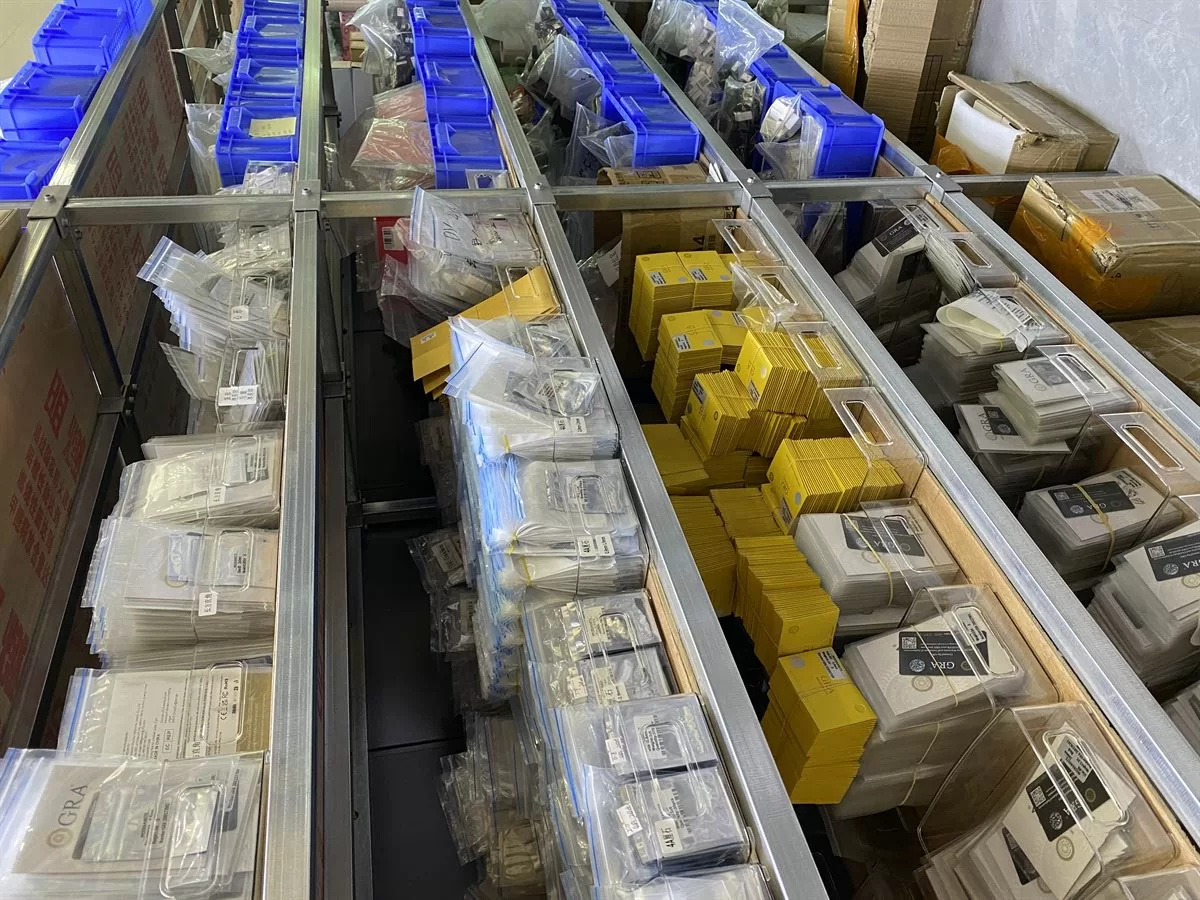
| Certification bundling | GRA grading included above a quantity threshold | Removes a per-stone line item |
| Packaging inclusion | Standard boxes and pouches at no charge | Material saving on direct-to-consumer lines |
| Reorder price step-down | 8% to 15% better on the second identical order | Recovers setup cost the factory already amortised |
| Sample credit | Sample cost credited against the first volume order | Removes trial cost from your launch budget |
| Exclusivity on a design | No resale of your custom design for 12 to 24 months | Protects the range you paid to develop |
How to ask for each one
- Payment schedule: ask after you have completed two on-time payments, not on the first order. We have paid on schedule twice, can we move to 40/60, is a reasonable request with evidence behind it.
- Metal price validity: ask in the same conversation as the deposit. A factory with a real hedging position can hold a gold price for 30 days. One without will say no, which tells you something.
- Freight consolidation: offer it as a benefit to both sides. Holding an order two weeks reduces their packing labour and your freight. Most factories agree immediately.
- Certification bundling: ask for GRA on stones above 0.50 ct when volume exceeds 200 pieces. The marginal cost to the factory is low and the perceived value to you is high.
- Packaging inclusion: specify exactly what you want, ask for the cost as a separate line, then ask what volume makes it free.
- Reorder step-down: agree it in writing at the time of the first order, when you have leverage. It is much harder to obtain retroactively.
- Sample credit: standard practice with most export factories. Confirm it before paying for the sample.
- Design exclusivity: the term buyers most often forget. If you paid for CAD and a mould, you should own the design for a defined period and territory.
The cost stack you should be negotiating against
| Line | Typical share of unit cost | How to reduce it |
|---|---|---|
| Stone | 15% to 60% | Change grade by one step, or switch material |
| Metal | 20% to 50% | Reduce weight by design change; change karat |
| Labour | 15% to 30% | Simplify the setting; fewer stones per piece |
| Plating and finishing | 3% to 8% | Standardise on one finish across the range |
| Packing | 2% to 6% | Standardise boxes; order packaging in volume |
| Certification | 0% to 10% | Bundle, or certify only the sizes that need it |
Read that table before every negotiation. If stone and metal together are 70% of unit cost, a 5% discount on the total is worth less than a one-step stone grade change plus a 10% metal weight reduction, and the latter two are usually easier to obtain because they do not touch the factory margin.
What not to negotiate
- Do not squeeze on quality checkpoints. Removing a QC step or an approval sheet to save time converts a small cost into a large claim risk.
- Do not demand below-market pricing. If the price is far under the market, the metal weight or stone grade has already been reduced on your behalf.
- Do not change specification after production starts without accepting the cost. That is a legitimate change order and factories price it accordingly.
- Do not play suppliers against each other on a live order. It works once, and it marks you as a buyer who will do it again.
A negotiation sequence that works
| Step | Action | Timing |
|---|---|---|
| 1 | Get the full cost stack in writing | At quotation stage |
| 2 | Identify which lines you can change without hurting the product | Before responding |
| 3 | Ask for specification changes first, price second | First reply |
| 4 | Agree payment schedule and metal validity | At deposit |
| 5 | Agree reorder step-down and exclusivity in writing | Before production starts |
| 6 | Ask for freight consolidation on your next order | Ongoing |
Buyers who follow this sequence typically improve landed cost by 10% to 18% across a year without ever asking for a discount. They also keep better supplier relationships, because every change was a specification decision rather than a margin argument.
Related Articles
- Wholesale Moissanite Pricing: What Drives the Price Per Piece
- How to Price Wholesale Jewelry for Retail (Without Killing Your Margin)
Authoritative References
For buyers who need to verify the technical and regulatory basis of this guide, the following independent institutions publish authoritative reference data:
- ISO 9001 Quality Management - the international standard for consistent production quality.
- Wikipedia: Jewellery - manufacturing processes, materials and global trade background.