Buying Guides
Jewelry Wholesale Trends 2026: What to Stock
Directional buying guidance for 2026: where lab grown and moissanite pricing is heading, which silhouettes and metals are gaining, the categories to reduce, and a seasonal stocking calendar.
Trend forecasts are only useful if they change what you order. This is directional guidance based on what our wholesale accounts are actually buying and reordering, together with the inventory decisions that follow from it. It is not a substitute for your own sell-through data, but it is a reasonable starting point for a 2026 buying plan.
Where pricing is heading
| Category | Direction | Buying implication |
|---|---|---|
| Lab grown diamond, 1 ct and above | Continued softening as capacity grows | Do not hold deep stock of large stones; buy close to sale |
| Lab grown melee | Stable to slightly down | Safe to hold depth in calibrated parcels |
| Moissanite | Stable; raw material is mature | Hold normal depth; differentiate on design, not price |
| Lab grown coloured gemstones | Stable, with premium niches holding | Depth in emerald, ruby and sapphire; buy paraiba to order |
| Silver metal | Volatile | Hold quoted metal prices for 15 to 30 days; avoid long-dated fixed retail prices |
| Gold metal | Volatile and elevated | Shift volume toward 10K and silver; keep 18K for premium only |
| Cubic zirconia | Stable and very low | Use freely for fashion and entry price points |
The single most consequential decision for 2026 is gold exposure. With gold elevated, the margin gap between a 14K and a 10K version of the same design has widened, which means lower-karat and silver versions of proven designs are the cheapest way to defend a price point.
Silhouettes and metals gaining ground
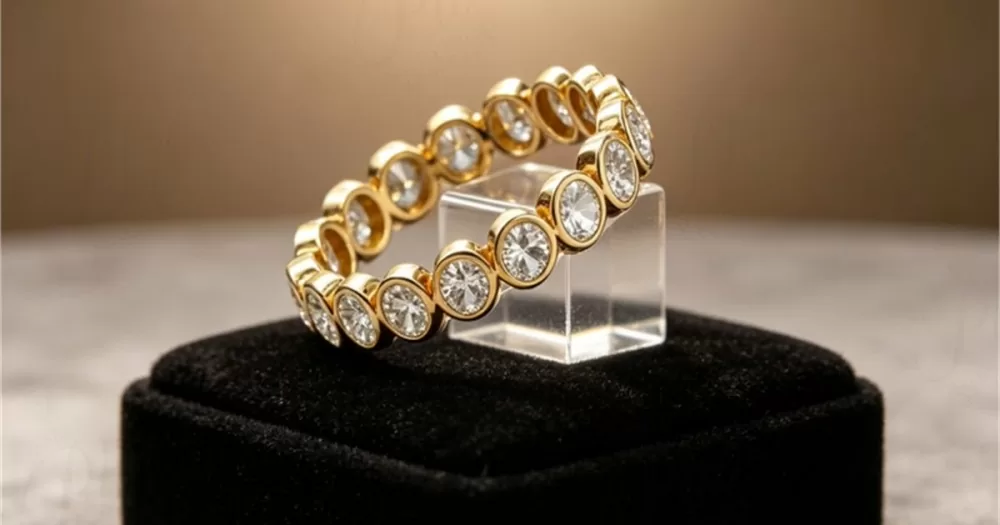
- Bezel and half-bezel settings. Modern, protective and they photograph well. The most consistent gainer across accounts.
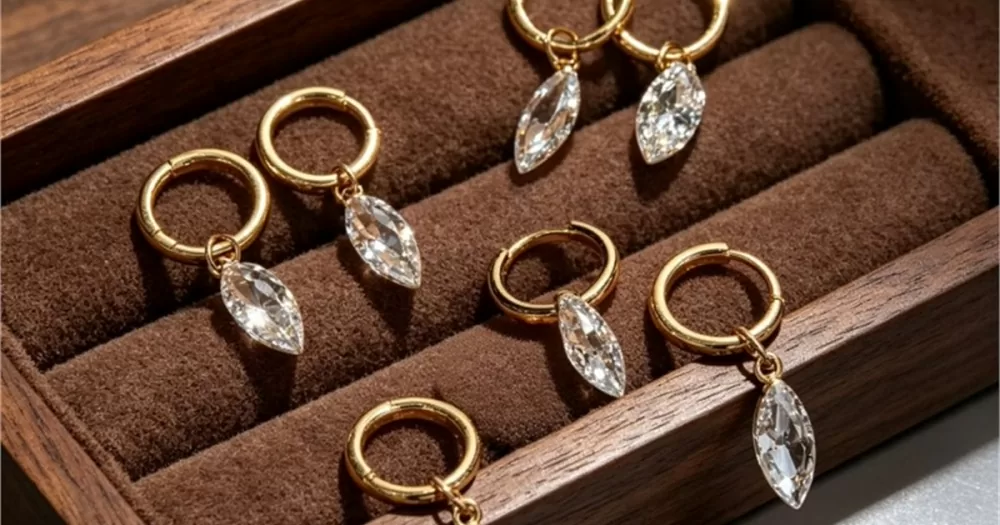
- East-west set stones. Marquise and oval set horizontally. Strong in pendants and rings, with low metal weight.
- Chunky signet and bold shank rings. Higher metal weight but a strong price story, particularly in 10K gold and silver.
- Mixed-metal and two-tone pieces. Yellow and white gold together, and 14K with silver accents at accessible prices.
- Yellow gold. Still gaining share from white gold in bridal across most markets.
- Layered and stackable sets. Three thin bands sold as a set outperform one wide band at the same retail price.
- Tennis lines in smaller stones. 2.0 to 2.5 mm stones instead of 3.0 mm brings the price point down without losing the look.
Categories to reduce
| Category | Why | Action |
|---|---|---|
| Heavy 18K gold fashion pieces | Gold cost makes the retail price uncompetitive | Reduce to two or three hero SKUs |
| Large single lab grown stones over 3 ct | Falling prices create markdown risk | Buy to order, not to stock |
| Complex pave on silver | Labour-heavy, high defect rate, low perceived value | Replace with channel or bezel accents |
| CZ in bridal positioning | Returns and review damage | Move CZ to fashion lines only |
| Very wide eternity bands | High stone count, high cost, narrow fit tolerance | Offer half-eternity instead |
The seasonal stocking calendar
| Order by | For delivery | Occasion | What to stock |
|---|---|---|---|
| Early January | February | Valentine Day | Heart motifs, solitaire pendants, entry price bridal |
| February | March to April | Mothers Day in the UK and most of the EU | Pendants, birthstone colour, lower price points |
| March | April to May | Mothers Day in the US, and graduation | Pendants, studs, initial and charm pieces |
| April | May to June | Wedding season and Fathers Day | Wedding bands, men rings, signets |
| June | July to August | Summer and holiday travel retail | Stackable, lightweight, colour stones |
| August | September to October | Back to school and early Q4 build | Fashion volume, CZ, layered looks |
| September | October to November | Black Friday and pre-holiday | Best sellers only, deep depth, fast reorder ready |
| October | November to December | Christmas and gifting | Gift-boxed sets, tennis lines, studs, pendants |
Production takes three to seven weeks depending on specification. Working back from the occasion is the discipline that separates sellers who capture a season from sellers who receive stock in the middle of it.
The buying plan we would write for a mid-size importer
| Category | Share of budget | Reason |
|---|---|---|
| Moissanite bridal in silver and 10K | 25% | Highest volume and margin combination |
| Lab grown diamond bridal in 10K to 14K | 20% | Ticket size and margin; buy to order where possible |
| Silver fashion and stackable | 20% | Traffic driver, gifting, low price point |
| Men rings and bands | 10% | Under-served, low returns, high metal weight value |
| Coloured gemstone in emerald, ruby and sapphire | 10% | Differentiation and colour story |
| CZ fashion entry line | 7% | Entry price point and trend testing |
| Tennis lines | 5% | High ticket and strong gifting performance |
| Tools and supplies | 3% | Repeat-purchase category for trade customers |
Three habits that matter more than any forecast
- Reorder before you run out. Set the reorder point at two units. Production takes weeks, not days.
- Track sell-through per design, not per category. Categories hide failures. A design with 8% sell-through over 90 days should be retired, whatever category it is in.
- Keep a small test budget. Reserve 5% to 8% of each order for new designs. Trends shift faster than annual buying plans.
Forecasts are wrong routinely. What survives every cycle is a narrow, deep range of proven designs, reordered on time, with a small allocation for testing. Build the plan around that and the trend direction matters far less.
Related Articles
- Moissanite vs Lab Grown Diamond: Which Should You Stock?
- CVD vs HPHT Lab Grown Diamonds: What Buyers Need to Know
Authoritative References
For buyers who need to verify the technical and regulatory basis of this guide, the following independent institutions publish authoritative reference data:
- ISO 9001 Quality Management - the international standard for consistent production quality.
- Wikipedia: Jewellery - manufacturing processes, materials and global trade background.