Lab Grown Diamonds
Moissanite vs Lab Grown Diamond for Resale: Which Pays Better in 2026?
Both are white, both are cheap, but the margin and return profiles are nothing alike. Here is the resale math.
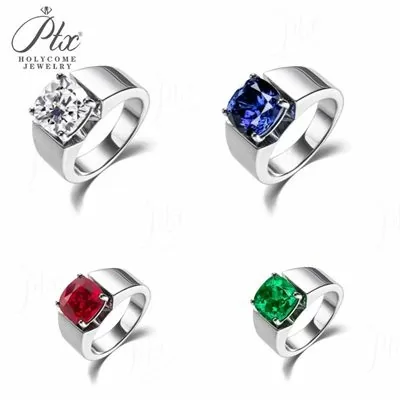
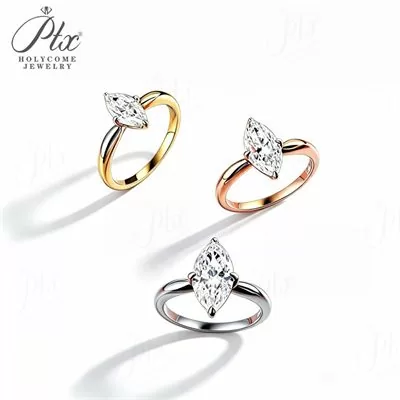
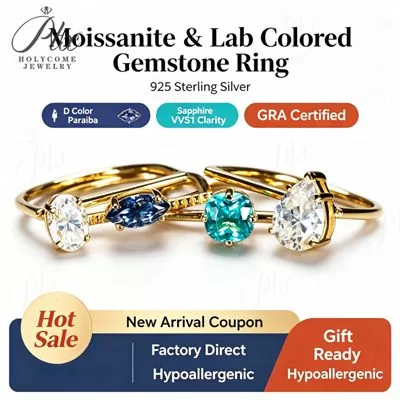
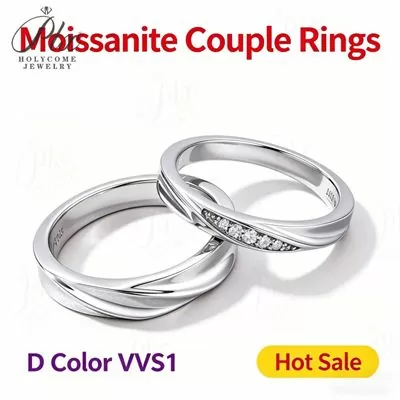
Moissanite and lab grown diamonds look similar in product photos and both cost a fraction of mined diamond. Buyers new to the category often treat them as interchangeable white-stone options. They are not. The wholesale cost, the retail price, the margin per piece, the return rate and the customer expectation all differ. Stock them on the same shelf and the customer comparison does the damage. Stock them deliberately and each one covers a different buyer. Here is the resale math for 2026.
The cost gap is wider than it looks
| Product (1ct look) | Wholesale cost | Typical retail | Gross margin |
|---|---|---|---|
| Lab grown diamond, 1ct DEF VS | $350-$480 | $1,400-$2,200 | 65-75% |
| Moissanite, 1ct equivalent | $25-$60 | $180-$450 | 75-85% |
| Lab diamond 0.5ct stud pair | $150-$260 | $450-$800 | 60-70% |
| Moissanite 1ct stud pair | $40-$90 | $200-$400 | 70-80% |
Moissanite carries a higher percentage margin, but on a much smaller absolute ticket. A moissanite ring at $40 retail gives you $30 of gross. A lab diamond at $1,800 gives you $1,100. Which is better depends on your volume. A high-traffic online store moves 100 moissanite rings a month and makes $3,000. A bridal boutique moves 10 lab diamond rings a month and makes $11,000. Both are real businesses, but they are different business models.
The return problem with moissanite
Moissanite has higher dispersion than diamond, which means it flashes more rainbow color. Some customers love that. Others expect diamond-like white brilliance and feel the rainbow flash is 'cheap'. When a moissanite ring is sold without disclosure as a 'diamond alternative', the return rate climbs. Sold as moissanite, to a customer who chose it knowing what it is, the return rate is normal.
Lab grown diamonds, sold with an IGI report, have a different return profile. Customers know they are buying a diamond. The return risk is in the 4Cs grading, not in the material. A VS1 that looks eye-clean in the photo but not on the finger is a grading expectation issue, not a material issue.
Which customer buys which
- Moissanite buyer: budget-conscious bridal, fashion ring buyer, someone who wants the look without the spend. Sensitive to price, less sensitive to resale value.
- Lab diamond buyer: wants a real diamond, wants a certificate, expects diamond hardness and diamond longevity. Will compare to mined.
The two customers rarely overlap. The moissanite customer will not pay $1,800. The lab diamond customer will not buy a $200 ring because they expect a certificate. Stock both if your store serves both, but keep them visually separated.
Disclosure and compliance
The FTC requires that simulants be disclosed as such. A moissanite ring labeled 'diamond' is misrepresentation, and the importer who brands it is liable. Hangtags and product pages should read 'moissanite', not 'diamond simulant' or 'alternative diamond'. Customers who know what they bought buy with confidence and do not return. Customers who feel misled return within weeks.
Insurance and grading cost
Lab diamonds come with an IGI or GIA report that costs $30-$80 per stone at wholesale. Moissanite does not come with a lab report; it is sold on its own certification from the manufacturer. That cost difference matters at the margin: a lab diamond ring's price includes the certificate, which the customer values. A moissanite ring's price does not, which is part of why it is cheaper. When you compare wholesale prices, compare them including the certificate cost for the lab stone and excluding it for the moissanite. The gap narrows further when you do that.
When you compare the two products at a wholesale trade show, the price difference is obvious: a bag of moissanite stones costs less than one IGI-graded lab diamond. The mistake is buying moissanite because it is cheaper and expecting it to carry the same customer expectation as lab diamond. It does not. Moissanite is a fashion bridal product. Lab diamond is a fine jewelry product. Stock each one for the customer it serves, and the margin per piece takes care of itself.
Start small: stock one moissanite SKU and one lab diamond SKU, watch the sell-through for a quarter, and double down on whichever the customer actually buys. The customer tells you which tier they want. Your job is to listen to the data rather than to your taste. Start with one of each, measure the sell-through, and scale the winner. The data decides, not your gut. Let the sell-through tell you which way to go next season. That is the only signal that matters.
We stock both materials with clear documentation and a comparison sheet for retail accounts. More on the range is on the stone materials page. The decision is not which is better. It is which customer you are serving, and which margin model you can actually operate.
Authoritative References
For buyers who need to verify the technical and regulatory basis of this guide, the following independent institutions publish authoritative reference data:
- GIA Gem Encyclopedia - independent grading and identification reference for natural and lab-grown gems.
- Wikipedia: Moissanite - peer-reviewed background on moissanite chemistry, optics and history.