Market Trends
The Stackable Ring Trend: What Retailers Should Stock
Stackable rings turn one transaction into three. Here is the wholesale buying logic behind the trend.
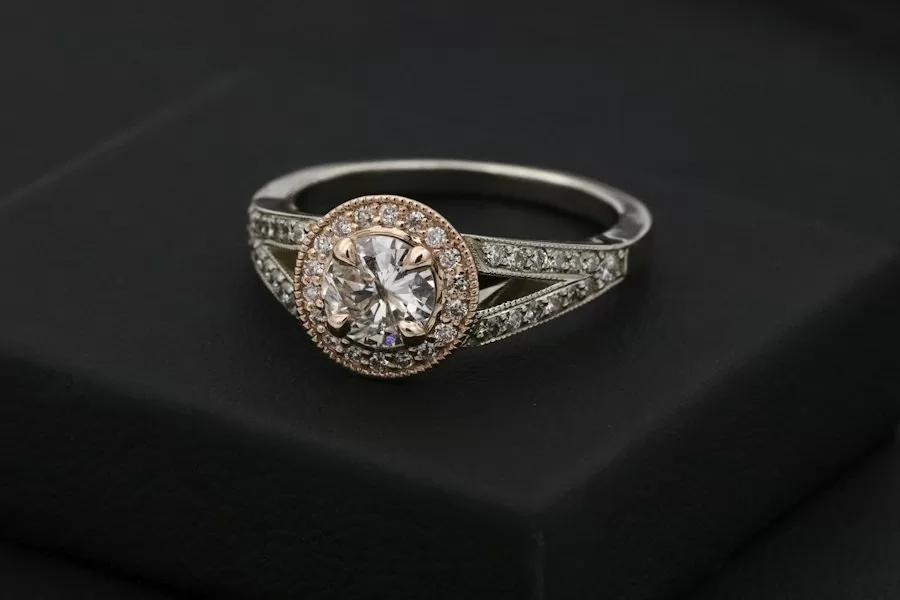
The single-statement ring is no longer the default. Customers now build rings in groups — a thin band here, a texture there, a tiny stone as the punctuation — and wear them stacked on one finger or spread across several. For retailers, stackable rings are one of the cleanest attach-rate tools in the case, because every ring added to a stack is an incremental sale that barely raises the customer's decision fatigue.
The wholesale opportunity is clear: a customer who comes in for one band leaves with three, and the average ticket climbs without the pressure of a single expensive decision. But the trend only pays off if the assortment is bought correctly.
Widths to anchor the stack
Every stack needs a few thin bands — 1.2 mm to 2 mm — as the building blocks. These are low-cost, high-turn pieces that customers buy two or three of at once. Above those, buyers should stock one or two wider statement bands at 4 mm to 6 mm, textured or set with a single accent, to give each stack a center of gravity.
Skip uniform 2 mm bands across the whole tray. A stack that reads as ten identical rings looks like a size run, not a curated collection. Mixed widths are what make the trend feel personal.
Metal and finish mixing
The modern stack mixes metals. Rose gold beside sterling silver, matte beside polished. Buying a range of finishes costs little extra and lets a customer combine pieces she already owns at home. This is also where moissanite accents earn their place: a single tiny stone on a thin band turns an everyday stack into something a customer photographs and posts.
If you are building a moissanite-adjacent stack program, keep the accent stones modest. A 1 to 2 mm moissanite on a slim band reads as delicate and wearable daily. Oversized stones on stack bands defeat the look and push the price out of impulse territory.
Size planning that prevents dead stock
Stackable rings are bought in pairs and triples, which means size runs matter differently than for solitaire rings. A customer building a stack will often wear slightly different sizes on adjacent fingers, so depth stock in 6 and 6.5 carries most of the volume. Use your existing size assortment framework but lean narrower — you do not need every half-size in depth, just the middle range where most women stack.
Midi rings, worn above the knuckle, run smaller and looser by design. Stock a few 4 and 5 sizes specifically for this purpose, and mark them clearly. Customers who try a midi band on the lower finger will reject it; those who try it on the knuckle will buy.
Building a repeat customer out of a stack
The real value of the category is not the first sale but the additions. A customer who builds a stack over time comes back once or twice a year to add a new band, and each visit is a chance to show her the rest of the case. Encourage this by releasing a small drop of new textures each season rather than reordering the exact same styles. The change gives existing customers a reason to return, and it keeps the display from looking static to first-time browsers.
Price points should step up in small increments. A customer who bought one $38 band will add a $48 textured one and then a $68 accent. Jumping straight to a $150 piece breaks the rhythm. Keep the increments gentle and let the stack grow with her budget rather than against it.
Gift sets are an underused angle. A pre-stacked trio boxed as a birthday or graduation gift sells at a bundled price that feels generous, and it gives the recipient a ready-made starting point to build on. Boutiques that test a small gift-boxed stack report strong attachment to that tier around the holiday season.
Keep the mix fresh enough to tempt repeat buyers but consistent enough that a customer's older pieces still match the new ones you bring in.
Merchandise it as a story
Stacks sell when they are displayed stacked. A tray of loose thin bands will move slowly; a display built as three or four finished stacks, with a card inviting the customer to build her own, moves faster. Train staff to suggest a starting band, a texture, and one accent at the counter. That three-sentence pitch is often enough to lift a $40 sale toward $120.
Because the price point is low, returns are rare and reorders are quick. Treat stackable bands as a replenishment category rather than a seasonal bet, and keep the display refreshed with one or two new textures each season. The customers who build a stack come back to add to it, which is the kind of repeat behavior every jewelry store wants.
Authoritative References
For buyers who need to verify the technical and regulatory basis of this guide, the following independent institutions publish authoritative reference data:
- FTC Advertising FAQs - U.S. guidance on truthful marketing and disclosure.
- Wikipedia: E-commerce - online retail and marketplace background.