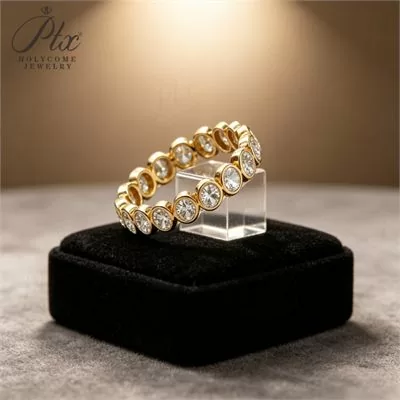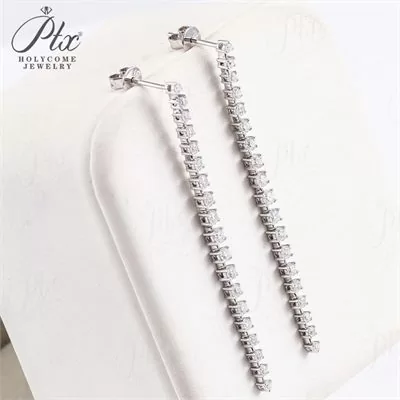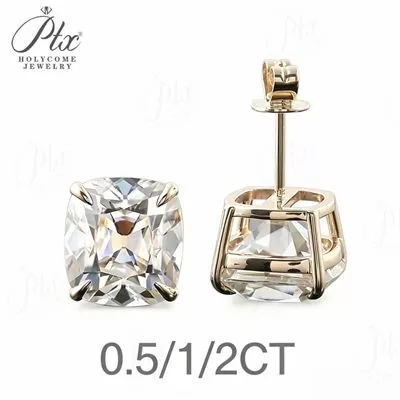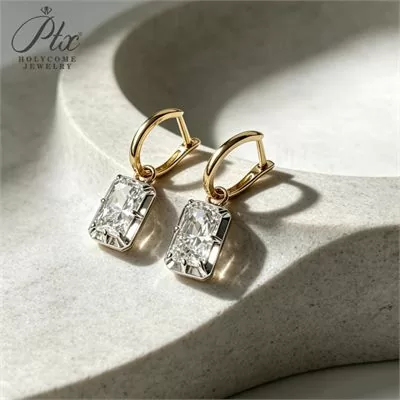
Women’s Rings
Wholesale Women’s Rings: Returns, Repairs & Warranty Terms
November 28, 2026 / Holycome Trade Desk / 8 cards
Returns, Repair, and Warranty: The Terms That Make or Break a Wholesale Women’s Rings Program Rings occupy a unique position in the jewelry assortment. They a
Returns, Repair, and Warranty: The Terms That Make or Break a Wholesale Women’s Rings Program
Rings occupy a unique position in the jewelry assortment. They are sized, worn constantly, exposed to water, soap, lotion, and impact, and they fail in ways other categories do not: stones loosen from settings, plating wears through on the shank, bands bend, and sizing turns out to be wrong. For a wholesale buyer building a Women’s Rings assortment, this means the after-sale terms your supplier offers — returns, repairs, and warranty coverage — are not administrative details.
They are a direct input into your true landed cost, your customer service load, and your reorder risk.
This article walks through the practical decisions a wholesale buyer faces on the returns, repair, and warranty angle, with the specific questions to ask and the clauses worth negotiating before you commit to a first purchase order.
Why After-Sale Terms Deserve Equal Weight to Price and MOQ
Buyers routinely negotiate unit price and minimum order quantities down to the cent, then accept whatever after-sale terms are printed on the order form. That is a mistake in this category specifically. Consider the failure modes unique to rings:
- Sizing errors. Wholesale rings are typically purchased in size runs. Whatever forecast you make, some sizes will sell slowly, and some customer purchases will be returned because the fit is wrong. Unlike a necklace, a ring cannot be "one size" — the category inherently generates more fit-driven returns.
- Stone loss. Small pave and channel-set stones in fashion rings are the single most common defect claim in the costume jewelry trade. Settings that survive shipping can loosen under daily wear within weeks.
- Plating wear. Plated rings — gold-tone, rhodium, rose gold — show wear first at contact points: the underside of the shank and the edges of the band. Customers notice this quickly because rings are on the hand, visible all day.
- Material sensitivities. Nickel release and skin reactions trigger both returns and reputational risk. If your supplier cannot document compliance with relevant restricted-substance standards, you carry that exposure alone.
Each of these failure modes has a financial consequence, and the question of who absorbs that consequence is answered entirely by your supplier's written policy. A supplier who prices slightly higher but covers defect returns with freight included may be cheaper in practice than a supplier with a lower unit cost and a "no returns on rings" clause.
The Returns Question: Separating Defects from Fit from Overstock
Define "defective" in writing, not in conversation
The first and most important negotiation is definitional. Many supplier agreements use vague language — "quality problems" or "manufacturing issues" — that becomes contested exactly when you need it most. Push for a written definition that names the failure modes relevant to rings:
- Loose or missing stones on arrival or within the warranty period under normal wear.
- Plating failure — peeling, flaking, or discoloration — within the warranty period.
- Structural defects: cracked bands, misaligned shanks, prongs that fail to hold a stone.
- Items that do not match the ordered specification: wrong size run, wrong plating color, wrong material (base metal delivered where sterling was ordered).
Ask whether "normal tarnish" and "normal plating wear" are excluded, and get clarity on the boundary. A reasonable standard distinguishes between cosmetic dulling that cleans off and plating that wears through to base metal within the warranty window. The second should be a covered defect; if a supplier insists it is "normal wear" within weeks of purchase, their plating quality is telling you something.
Fit-driven returns: who absorbs the size problem?
Sizing returns are not defects, but they are also not the retailer's fault alone — the supplier's size-run recommendation and the accuracy of their sizing charts are contributing factors. Practical options to discuss:
- Whether the supplier accepts exchange-only returns for wrong sizes — you return slow sizes from the run and swap for faster-moving sizes. This costs the supplier nothing in refunds and solves a real inventory problem for you.
- Whether unsold sizes from a size run can be rolled into a subsequent order as a credit toward new stock, even at a discount. Some suppliers agree to this for repeat customers; it is worth asking explicitly.
- Whether the supplier provides verified sizing specifications (inner diameter in millimeters per size) that you can publish, so returns caused by inaccurate charts become the supplier's responsibility rather than yours.
Overstock and unsold seasonal designs
Fashion ring trends move quickly, and buyers need an exit for unsold designs. Suppliers differ sharply here. Some accept returns of current-catalog stock for account credit with a restocking deduction; others accept returns only within a short window from delivery; many accept nothing once goods leave the warehouse. Before ordering a trend-driven Women's Rings capsule, confirm in writing what happens to unsold units. If the answer is nothing, treat that capsule as higher-risk inventory and size the initial order accordingly.
The Repair Question: Rings Fail Differently
Resizing: covered, chargeable, or impossible?
The first repair question for rings is resizing, and the honest answer depends on material. Precious metal bands can usually be resized by any competent jeweler. Hardened stainless steel and titanium bands generally cannot be resized at all — a resizing "service" for those materials is really a replacement. Ask your supplier:
- Do they offer resizing in-house or through a partner, and for which materials?
- Is resizing covered under warranty, offered at a fixed service fee, or not offered — with replacement as the alternative?
- What is the turnaround time, and who pays freight in each direction? A repair loop that takes many weeks effectively removes stock from your sellable inventory twice — once when the customer returns it and again until the repaired unit comes back.
Stone re-setting and plating renewal
For fashion rings, the repair conversation centers on re-setting lost stones and renewing worn plating. Key points to establish:
- Does the supplier supply replacement stones or repair parts, so minor repairs can be handled locally instead of shipping units back? For small crystal and cubic zirconia stones, a parts supply agreement is often more economical for both parties than a return-and-repair loop.
- Is there a limit on free repairs per unit? Many warranties cover one repair event per item. Know the limit and factor it into how you handle customer claims at retail.
- Does a repaired or replaced unit retain the original warranty period or restart it? A warranty that restarts on replacement is materially better for you and your customers.
- Who performs the repair — the supplier's workshop, the original manufacturer, or a third party — and who is accountable if the repair fails?
The Warranty Question: Length Is Less Important Than Exclusions
Warranty terms in the fashion jewelry trade vary widely by material tier. The table below summarizes how warranty expectations typically differ across common ring materials — use it as a checklist for what to confirm with any supplier, not as a universal standard:
| Material tier | Typical warranty scope to expect | Most common exclusions to scrutinize | Dominant claim type |
|---|---|---|---|
| Plated base metal (alloy, brass with gold/rhodium plating) | Limited warranty against manufacturing defects; plating coverage often shorter than structural coverage | Water exposure, cosmetics, "normal" plating wear, tarnish | Plating wear-through, stone loss, skin reaction |
| Stainless steel | Structural and finish defects; frequently no resizing option (replacement instead) | Surface scratches, impact damage | Fit issues, clasp/hinge faults on hinged rings |
| Sterling silver | Longer defect coverage; tarnish usually excluded as inherent to the metal | Tarnish, bending from impact | Tarnish disputes, stone settings, deformation |
| Gold-filled / gold vermeil | Coverage on the gold layer wearing through within a defined period | Chemical exposure, abrasive wear | Gold-layer wear, base metal exposure |
Two warranty mechanics matter as much as length:
Claim routing: through you, or direct from the consumer?
Establish whether end-customer warranty claims route through your business or directly to the supplier. Routing through you keeps you in control of the customer experience and gives you the defect-rate data you need for reorder decisions — but it puts handling labor on your team. Direct routing reduces your workload but can disconnect you from the claim data, and a supplier's direct handling of your customers is a brand-experience risk you should vet.
Whichever model applies, insist that you receive a summary of claim volumes and causes on a regular schedule. That data is your early-warning system for a bad production batch.
Claim evidence and process SLA
A warranty is only as strong as its workflow. Before signing, get the process specified:
- Exact evidence required: photos of the defect, the item's SKU and batch or lot number, and the purchase reference. Vague evidence requirements are the leading cause of stalled claims.
- A named claims contact or dedicated portal — not a general sales inbox that prioritizes new orders over after-sale issues.
- A stated service level: acknowledgment within a defined number of business days and resolution within a defined window. Put the numbers in the agreement.
- The remedy format: cash refund, account credit, or replacement units — and whether you can choose. Replacement units are often fastest for you; credits keep cash flowing; know which the supplier defaults to.
- Freight responsibility for warranty returns, both directions, in writing.
Negotiation Levers Worth Using
Suppliers respond to volume commitments and shared risk, not to requests for generosity. Three levers that work in practice:
- Defect-rate threshold clauses. Propose that if a specific SKU's verified defect claims exceed an agreed percentage of units sold over a quarter, that SKU moves to enhanced remedies — replacement without return of low-value units, or a credit against future orders. This converts an open-ended dispute into a measured, data-triggered term, and suppliers with confidence in their quality control will accept it.
- Volume-tiered after-sale terms. Offer a larger or recurring commitment in exchange for stronger terms: a longer defect-return window, supplier-paid return freight, or parts supply for local repairs. Tie the ask to a concrete order volume so it reads as a trade, not a favor.
- Batch traceability. Require lot or batch codes on ring shipments. This is cheap for the supplier and transformative for you: when a defect pattern emerges, traceability lets you scope the claim to the affected batch instead of disputing every unit individually.
Red Flags That Should Stop an Order
Some answers disqualify a supplier regardless of price. Treat the following as stop conditions for a Women's Rings program:
- "No returns on rings under any circumstances," including on arrival defects.
- Refusal to provide material composition or restricted-substance compliance documentation — this is both a returns risk and a regulatory one.
- A warranty so loaded with exclusions (any moisture, any cosmetic contact, any tarnish) that it covers nothing a customer would actually experience.
- No batch coding and no willingness to add it.
- An unwritten after-sale policy — anything agreed only verbally will not survive the first disputed claim.
Order Terms for Wholesale Buyers
MOQ is 1 piece for stock styles and 30 pieces for custom work, and loose stones are sold by the carat. Sampling takes 7 to 10 days, and bulk production runs 15 to 25 days after the sample is approved. Pricing is quoted per piece or per carat depending on the item. Payment is T/T with a 30% deposit and the 70% balance before shipment, and PayPal is accepted for sample orders.
Frequently Asked Questions
How long should a wholesale defect-return window be for fashion rings?
Long enough to cover realistic wear-based failure discovery, not just arrival inspection. Stone-loss and plating-wear claims typically surface after the customer has worn the ring for some time, so a window covering arrival defects plus a defined wear-in period gives you meaningful protection. The right length depends on your material tier and sales cycle — negotiate it against your actual claim data from comparable categories rather than accepting a default.
Should I accept account credit instead of cash refunds for supplier returns?
Credit is standard in wholesale and usually acceptable if the supplier's catalog is one you intend to keep buying from. Cash refunds matter more for one-off trials or when you are exiting the relationship. If you accept credit terms, confirm the credit's expiration and whether it applies across the supplier's full catalog or only specific lines.
Who should handle end-customer warranty claims — me or my supplier?
Routing claims through you gives you control of the customer experience and the defect data, at the cost of handling labor. Direct-to-supplier routing saves labor but costs you visibility and puts your brand's service reputation in someone else's hands. Most buyers handle first-line claims themselves and batch genuine manufacturing claims to the supplier — this keeps the customer fast and the supplier accountable.
What documentation should I keep to support warranty claims?
Keep the purchase order, delivery confirmation, batch or lot numbers, timestamped photos of defects, and a log of claim dates, SKUs, and resolutions. Organized records convert warranty negotiations from anecdote arguments into documented patterns — which is precisely what triggers threshold clauses and credits.
Building a Program That Survives Its Own After-Sale Reality
The wholesale buyers who run profitable jewelry assortments are not the ones who never face a defective ring — that is not achievable in this category. They are the ones whose supplier terms were negotiated so that every failure mode has a defined owner, a defined remedy, and a defined timeline. Before your next Women's Rings order, put the returns definition, the repair scope, the warranty exclusions, and the claims workflow on one page and get it signed.
Then stock the assortment with confidence, starting from a range you can evaluate end to end:
Browse the full assortment in our complete wholesale product catalog, shortlist proven performers from our best-selling jewelry collections, and keep up with category and sourcing guidance on our trade journal.
Sources: Grading references: GIA gem education and GIA laboratory information.