Custom & OEM
Jewelry Packaging and Branding: Tags to Gift Boxes
Packaging is the cheapest perceived-value lever in jewellery. A component-by-component guide with realistic unit costs, production lead times, and the specification details that prevent a printing run from becoming a mistake.
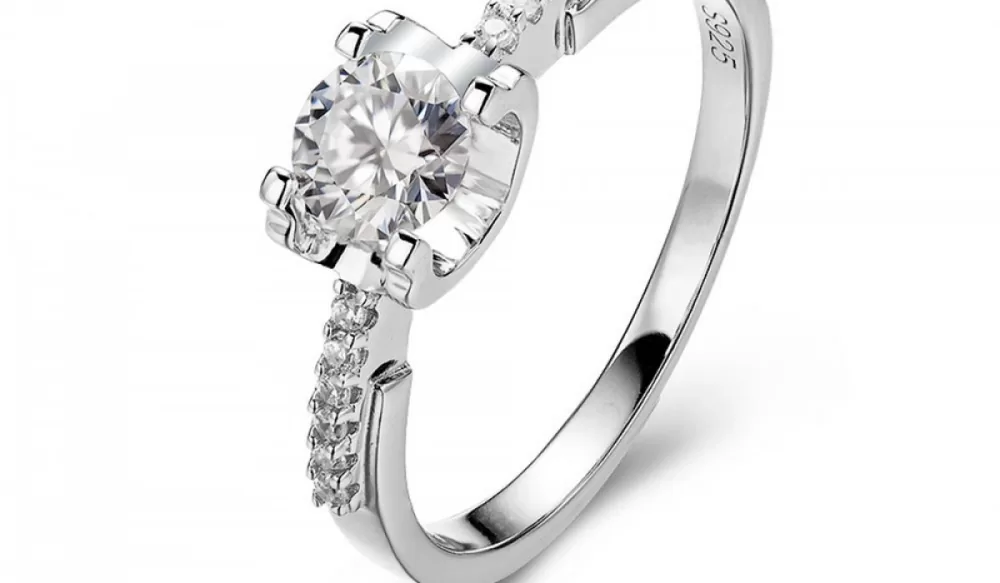
A jewellery piece is judged twice: in the photograph, and in the hand when the box opens. Packaging influences the second judgement, review scores and repeat purchase, and it costs a fraction of what improving the piece itself would cost. It also has its own production lead times that buyers routinely forget to plan for.
The component stack, with realistic costs and lead times
| Component | Typical unit cost | Lead time | MOQ guide |
|---|---|---|---|
| Rigid gift box with foam insert | 0.60 to 1.80 USD | 15 to 20 days | 500 to 1,000 pcs |
| Folding carton box | 0.25 to 0.70 USD | 12 to 18 days | 1,000 pcs |
| Suede or velvet pouch | 0.15 to 0.45 USD | 10 to 15 days | 500 pcs |
| Paper jewellery tag with string | 0.03 to 0.10 USD | 10 to 14 days | 1,000 pcs |
| Printed care card | 0.04 to 0.12 USD | 10 to 14 days | 1,000 pcs |
| Certificate sleeve | 0.05 to 0.15 USD | 10 to 14 days | 500 pcs |
| Anti-tarnish poly bag | 0.01 to 0.03 USD | In stock | 5,000 pcs |
| Branded sticker or seal | 0.02 to 0.06 USD | 10 to 14 days | 2,000 pcs |
| Branded microfibre cloth | 0.20 to 0.60 USD | 15 to 20 days | 500 pcs |
Note the pattern: printed components have their own 10 to 20 day production lead time and their own minimum order. If you order packaging after production is approved, your finished goods sit in a warehouse waiting for boxes. Order packaging in parallel with sampling.
What to specify, precisely
- Box dimensions in millimetres, internal and external, plus the insert cavity size. A box 3 mm too shallow will not close over a cathedral setting.
- Board weight and finish. Ask for the GSM, typically 1,200 to 1,500 gsm for a rigid box, and the finish: matte lamination, soft-touch, gloss or uncoated.
- Colour reference, not a colour name. Give a Pantone number or a physical sample. Navy blue produces a different blue from every printer.
- Logo specification. Vector artwork in AI, EPS or PDF, with size in millimetres, and whether it is foil, embossed or printed.
- Foil colour. Gold foil is not one colour. Specify rose gold, yellow gold, or a Pantone metallic.
- Insert material and cut. EVA foam, velvet-covered foam or moulded pulp. Each has a different look and cost.
The unboxing sequence that actually works
| Order | Item the customer sees | Purpose |
|---|---|---|
| 1 | Outer mailer or shipping carton | Protection; keep it plain and recyclable |
| 2 | Branded rigid box | The perceived-value moment |
| 3 | Foam insert with the piece seated | Prevents movement; feels engineered |
| 4 | Pouch behind the insert | Gives the customer somewhere to keep it |
| 5 | Certificate sleeve | Credibility at the moment of judgement |
| 6 | Care card | Reduces complaints about tarnish and wear |
Anti-tarnish and transit protection
- Anti-tarnish poly bags with a corrosion-inhibiting lining for silver. This is the cheapest defect prevention available.
- Individual bagging prevents pieces scratching each other in transit. Never ship loose rings together without separation.
- For chains and tennis lines, use a card with the piece pinned flat to prevent kinking.
- Include a silica gel sachet in humid destinations. Condensation is a real cause of surface spotting.
Cost engineering: where to spend and where not to
| Spend here | Save here |
|---|---|
| Rigid box structure, because it is what the customer holds | Box printing complexity; one colour foil beats four-colour |
| Foam insert fit, which prevents returns | Custom box sizes; standard sizes are far cheaper |
| Care card, which reduces support enquiries | Multiple card designs; one well-written card covers the range |
| Anti-tarnish bags, which prevent tarnish claims | Branded stickers on every bag; use them only on hero pieces |
Planning the packaging timeline against production
Packaging is the most common cause of a launch slip that buyers blame on production. Printed components run on their own schedule and their own minimum order, and they cannot be compressed the way a reorder can. This is the sequence that keeps a launch on date.
| Week | Product track | Packaging track |
|---|---|---|
| 1 | Brief and quotation | Decide box format, dimensions and finish |
| 2 | CAD and render | Send vector artwork and Pantone references |
| 3 | Sample in production | Approve packaging dieline and foil proof |
| 4 | Sample approved | Packaging in production |
| 5 to 7 | Bulk production | Packaging received and inspected |
| 8 | QC and assembly | Insert fitting and pack-out |
If packaging is ordered after sample approval, the same sequence takes 12 weeks instead of 8, and the finished jewellery sits in storage in the interim. That delay is entirely avoidable and it is the single most common planning error we see on private-label projects.
Inspecting packaging on arrival
- Check board weight by feel against the approved sample. A lighter box is the most common cost reduction a printer will make quietly.
- Check the foil or print registration against the approved proof, ideally under the same lighting you will use for product photography.
- Test the insert fit with an actual finished piece, not a mock-up. A 1 mm cavity difference is enough to let the piece move in transit.
- Check the lid closure on at least twenty boxes from the carton, because a single mis-set die cuts a whole run slightly loose.
- Photograph the first packed unit before committing the whole run, since that photograph is what your customer will judge the brand on.
A realistic packaging budget per order
| Order size | Packaging cost per piece | Share of a 60 dollar retail piece |
|---|---|---|
| 500 pieces, folding carton plus pouch plus tag | About 0.55 USD | Under 1% |
| 500 pieces, rigid box plus insert plus pouch plus card plus sleeve | About 1.50 USD | 2.5% |
| 1,000 pieces, full rigid set with foil logo | About 1.20 USD | 2% |
Two percent of retail for a materially better unboxing is one of the highest-return investments in the category. The failure mode is not cost. It is timing. Plan packaging at the same time as the product, or your launch slips by three weeks waiting for boxes.
Related Articles
- IGI vs GRA Certificates: What Wholesale Buyers Need to Verify
- Stud Earrings Wholesale: How to Build a Fast-Turning Earring Programme
Authoritative References
For buyers who need to verify the technical and regulatory basis of this guide, the following independent institutions publish authoritative reference data:
- ISO 9001 Quality Management - the international standard for consistent production quality.
- Wikipedia: Jewellery - manufacturing processes, materials and global trade background.