Moissanite
Moissanite vs White Sapphire: How to Position Each in Your Case
White sapphire and moissanite both sit below diamonds in price, but they are not substitutes for the same shopper. Knowing the difference protects your sales.
Customers shopping below diamond price points often arrive asking for something that looks like a diamond but costs less. That request can lead to two very different stones: moissanite and white sapphire. Both are naturally white, durable and far cheaper than a comparable diamond. Yet they are not interchangeable products, and a salesperson who treats them as the same thing loses either the sale or the customer's trust. Positioning each stone correctly is one of the clearest margin and loyalty plays in the alternative-bridal case.
The brightness difference customers actually see
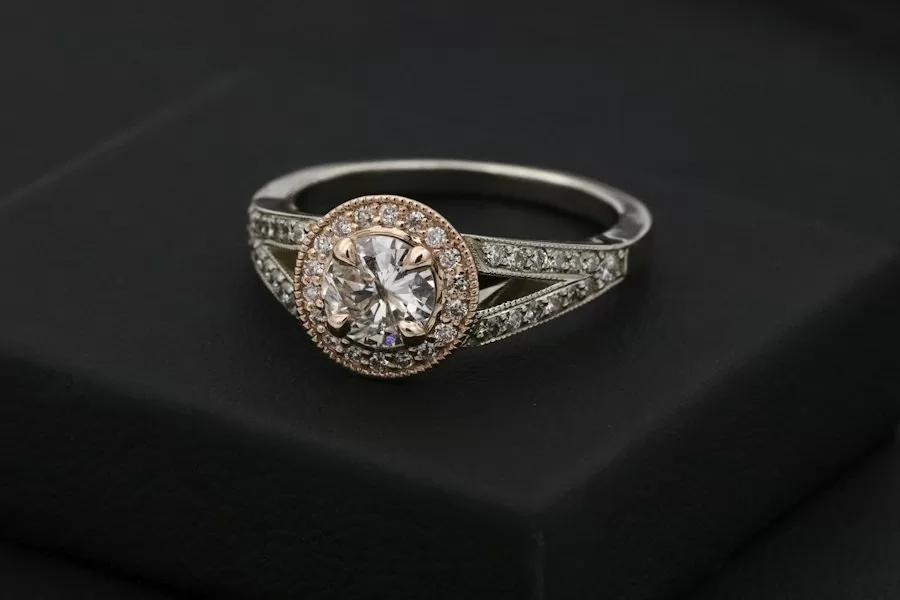
The fastest way to tell the two stones apart is to put both in light and watch how they react. Moissanite has a high refractive index and strong fire—it returns flashes of colored light along with white brilliance, and it looks noticeably bright under almost any lighting. White sapphire has a lower refractive index, so it reads as softer, whiter and more subdued; in dim light it can look slightly gray or milky rather than fiery.
This is not a quality difference; it is a material personality. The customer who wants the brightest thing possible, the one that sparkles from across the room, is a moissanite customer. The customer who wants a quieter, more classic, traditional white gemstone that looks like a simpler diamond is often a white-sapphire customer. Staff who describe the light behavior instead of declaring a winner sell both stones well.
Durability: both are tough, but in different ways
Moissanite sits at roughly 9.25 on the Mohs scale; white sapphire is a 9. Both are genuinely wearable as everyday bridal stones, and both outlast softer alternatives. The practical difference is in edge behavior. White sapphire is a natural corundum that can have subtle internal inclusions and a slightly harder edge that chips more readily on a sharp impact. Moissanite is synthetic, typically eye-clean, and extremely consistent stone to stone.
For the bridal customer who wants zero visible inclusions and a stone that looks identical to the product photos, moissanite is the predictable choice. For the customer who likes the idea of a natural, earth-mined gemstone and accepts slight natural character, white sapphire carries the story she wants. This is the same positioning logic at work in our coverage of moissanite versus cubic zirconia positioning: the stone that wins depends on which value the customer weights.
Price and wholesale structure
White sapphire and moissanite occupy adjacent but distinct price bands. White sapphire, as a natural material, is priced by carat with natural-stone variation, and larger clean stones cost disproportionately more. Moissanite is manufactured, so pricing is by calibrated millimeter size with predictable, repeatable costs—closer to the model we described in colored gemstone selection than to loose natural parcels.
The retail implication: moissanite lets you offer a consistent reads like about a one-carat diamond result at a steady price, which makes it ideal for mounted stock and repeat orders. White sapphire suits boutiques that want a natural-stone story and are comfortable sourcing parcels where each stone varies. Most retailers stock both, in different settings, and let the customer's preference for brightness versus naturalness decide.
Side-by-side display makes the sale
The fastest way to resolve a customer torn between the two stones is to put both on her hand at once. Offer a moissanite solitaire and a white-sapphire solitaire in the same setting style, in similar visual size, and let her look down. In that moment she will usually notice the difference in light behavior herself and lean one way. Staff who describe the difference in the abstract lose the sale; staff who let the stones compete on the customer's finger almost never do. Keep a pair of affordable demo rings in both materials on hand, rotated out as they wear, and treat them as a sales tool rather than inventory.
This also works online. Short, honest side-by-side photos in natural light—no heavy sparkle filters—help the shopper self-select before she ever walks in the door, which pre-qualifies the lead and reduces returns.
What never to say
Avoid the trap of declaring one stone better. A customer who came in wanting a natural gemstone will feel tricked if pushed toward a lab-grown simulant, and a customer who wants maximum sparkle will be underwhelmed by sapphire's softer light. Also avoid implying white sapphire is fake—it is a real natural gemstone, and insulting a customer's preferred material insults the customer. The winning script is descriptive: brightness, durability, origin and price, then the customer's choice.
Stocking both protects your revenue
Well-run alternative-bridal cases carry moissanite as the bright, consistent, value-led anchor and white sapphire as the natural, quieter, more classic option. You capture the bride who wants fire and the bride who wants heritage, with two different margin structures and no direct price comparison. Train staff on the light difference, stock both in simple solitaire settings, and let the stones sell themselves to the customer who was always looking for one of them.
Authoritative References
For buyers who need to verify the technical and regulatory basis of this guide, the following independent institutions publish authoritative reference data:
- GIA Gem Encyclopedia - independent grading and identification reference for natural and lab-grown gems.
- Wikipedia: Moissanite - peer-reviewed background on moissanite chemistry, optics and history.