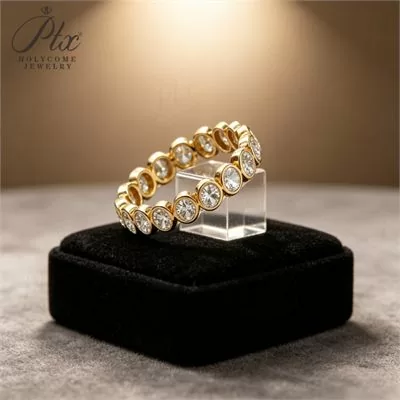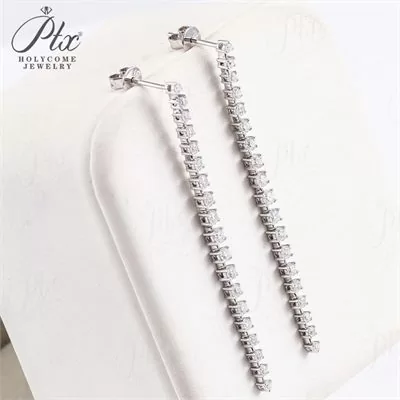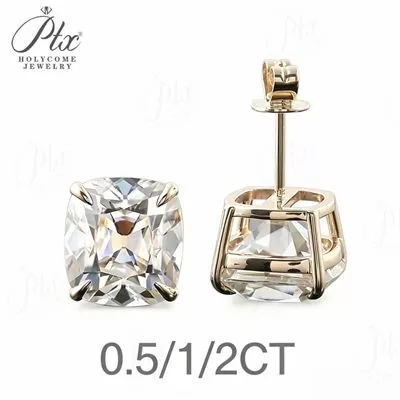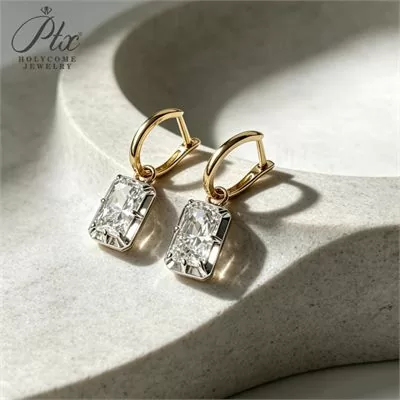
Women’s Rings
Wholesale Women’s Rings: Incoming QC & Pre-Ship Inspection
November 26, 2026 / Holycome Trade Desk / 8 cards
Women’s rings are one of the most inspection-sensitive categories in a jewelry wholesale program. Because rings are small, closely worn, and judged up close b
Women’s rings are one of the most inspection-sensitive categories in a jewelry wholesale program. Because rings are small, closely worn, and judged up close by end customers, defects that would pass unnoticed on a pendant or a pair of earrings become immediate returns on a ring order.
This article walks through how incoming quality control and pre-ship inspection actually work for women’s rings, what you as a buyer should check or request at each stage, and how to build inspection terms into your order so problems are caught before goods leave the factory rather than after they reach your warehouse.
Why Women’s Rings Demand Tighter Inspection Than Other Categories
A ring concentrates several failure points into a very small object. The band must be round and the correct size, the setting must hold stones at the right height and angle, the prongs must be even and free of casting porosity, and any plating or vermeil layer must be uniform across a curved surface.
A loose stone, a rough prong tip, or a thin plating spot on the inside of the band is the kind of defect a customer notices within days of wearing the piece.
Rings also carry higher perceived value per gram than most other jewelry categories. Buyers of women’s rings tend to order finer specifications, including 925 sterling silver with rhodium plating, gold vermeil, and 10K, 14K, or 18K solid gold, often set with moissanite graded with GRA or IGI papers. The higher the specification, the more a single missed defect costs you in replacement, refund, or reputation.
That is why the incoming and pre-ship stages of inspection deserve as much attention as the design and pricing conversation.
The Three-Stage QC Structure for Ring Orders
Production for women’s rings runs through a three-stage quality control process: incoming inspection, in-process inspection, and pre-ship AQL inspection. Each stage catches a different class of defect, and understanding the division of labor helps you know what to ask about at each point.
Incoming Inspection: Materials and Loose Stones
Incoming inspection covers everything that arrives at the factory before assembly. For rings, that means metal stock or castings, findings such as prong heads and gallery rails, and loose stones. Loose moissanite is checked against the grading paperwork — GRA or IGI — so the stone that goes into a ring matches the certificate that ships with it.
Stones are examined for chips, abrasions, and color consistency across the parcel, since a mixed batch of stones becomes visible the moment two rings sit side by side on your shelf.
Metal components are checked for assay and for casting quality. Porosity, pits, and incomplete fill in a casting show up most often at prong bases and around the gallery, exactly where mechanical stress concentrates on a worn ring. If a supplier’s incoming inspection does not include a casting check, defects move downstream to the setting bench, where they are more expensive to fix.
In-Process Inspection: Setting, Sizing, and Finishing
During production, rings are inspected after setting, after sizing, and after polishing. The setter checks seat depth and prong tightness; the polisher checks for scratches, buff marks, and plating readiness. In-process inspection is where sizing accuracy is verified against the order’s size run, and where stone alignment is checked on multi-stone styles such as eternity bands and cluster rings.
A buyer who asks for photos at the in-process stage can catch a systematic issue — for example, stones set at uneven heights across a batch — while it is still economical to correct.
Pre-Ship AQL Inspection: The Final Gate
The pre-ship stage uses AQL (Acceptable Quality Limit) inspection on finished, packed goods. A sample of the order is pulled at random and checked against a defect list: stone security, prong finish, band roundness, plating uniformity, hallmark accuracy, stone-to-paper matching for graded moissanite, and packaging condition. If the sample exceeds the accepted defect rate, the batch is reworked or re-inspected before shipment.
For buyers, the practical takeaway is to agree on the defect list before production starts, so the AQL check measures the things you actually care about rather than a generic checklist.
What Should Be on Your Ring Inspection Checklist
A shared checklist between you and the supplier is the single most useful inspection tool. It converts vague expectations into pass or fail criteria an inspector can apply consistently. For women’s rings, a practical checklist covers the following points.
- Stone security: each stone tested for tightness; no movement under light pressure.
- Prong quality: prongs evenly formed, polished, no sharp tips, no porosity at the base.
- Stone and certificate match: graded moissanite matches its GRA or IGI paper by carat weight and specification.
- Sizing accuracy: rings measure to the ordered size on a mandrel, across the full size run.
- Band condition: round band, no dents or tool marks, comfortable inside edge.
- Plating and finish: uniform color, no exposed base metal, rhodium or gold layer consistent on the inside of the shank, not just the face.
- Metal accuracy: 925 sterling silver hallmarked correctly; solid gold items in 10K, 14K, or 18K stamped to match the order.
- Packaging: correct box or pouch, certificate included where applicable, size labels correct.
Building Inspection Terms Into Your Order
Inspection works best when it is written into the commercial terms, not treated as a courtesy. The points below are the ones wholesale buyers most commonly negotiate, and each maps directly to how the three-stage QC system is executed.
Sampling Before Bulk Commitment
Sampling takes 7 to 10 days, and it is your first chance to inspect quality in your own hands. Order samples of the exact metal and plating you intend to buy — a vermeil sample will not tell you how a 14K solid gold ring wears. Wear the sample, flex-test the prongs gently, and check the plating inside the shank after a week of handling. Approve the sample as the physical standard the bulk order is inspected against.
AQL on Packed Goods, Not Bench Goods
Ask that pre-ship AQL inspection be run on fully packed, labeled goods, because packaging defects and certificate mismatches are found at that point, not earlier. Request the inspection report and, for larger orders, photos of sampled pieces. If you work with a third-party inspector, schedule them after packing is complete and before the balance payment falls due.
Payment Timing That Matches Inspection
Payment terms follow a T/T structure of a 30 percent deposit with the 70 percent balance due before shipment. Since the balance is paid before goods leave, the pre-ship AQL inspection is your last structured checkpoint — which is exactly why it should be documented with a written report. Sample orders can be paid through PayPal, which keeps the early, lower-stakes stage simple while you evaluate a new supplier.
Documentation You Should Receive
For every ring order, expect a pre-ship inspection report listing the defects found and their disposition, GRA or IGI papers for graded moissanite, and hallmark confirmation for 925 sterling silver and solid gold items. Keep these documents filed with the approved sample; together they form the reference for any future dispute or reorder.
Common Defect Types Found at Pre-Ship Inspection on Rings
The table below summarizes the defect categories that most frequently appear during pre-ship AQL inspection of women’s rings, with the stage where each is best caught. Use it as a starting point for your own shared checklist with your supplier.
| Defect | Where It Shows | Best Caught At |
|---|---|---|
| Loose or chipped stone | Wear within days | In-process and pre-ship |
| Casting porosity at prongs | Prong failure over time | Incoming casting check |
| Plating wear inside shank | Visible discoloration | Pre-ship AQL |
| Wrong size or mixed run | Returns and remakes | In-process sizing check |
None of these defects is exotic. They are routine, findable problems, which is the good news: a consistent incoming and pre-ship inspection routine finds nearly all of them before shipment. The cost of finding them at the bench is minutes; the cost of finding them after delivery is a replacement unit, freight, and a customer conversation.
Timing Your Order Around Inspection and Delivery
Plan your calendar with inspection built in. Sampling takes 7 to 10 days, and bulk production runs 15 to 25 days after approval. Pre-ship inspection and any rework add time at the end of that window, so build a few days of buffer between production completion and your ship date. Once goods pass AQL and the balance is settled, DDP delivery to the US takes 5 to 8 days, with customs and duties handled before the goods reach you.
For seasonal buying — holiday sets, Mother’s Day, Valentine’s gifting — work backward from your in-stock date and add sampling, production, inspection, and shipping buffers on top. Buyers who leave inspection out of the schedule end up compressing it, and compressed inspection is the stage where defects slip through.
Order Terms for Wholesale Buyers
MOQ is 1 piece for stock styles and 30 pieces for custom work, and loose stones are sold by the carat. Sampling takes 7 to 10 days, and bulk production runs 15 to 25 days after the sample is approved. Pricing is quoted per piece or per carat depending on the item. Payment is T/T with a 30% deposit and the 70% balance before shipment, and PayPal is accepted for sample orders.
Frequently Asked Questions
Can I inspect women’s rings myself instead of relying on factory QC?
You can, and many buyers do both. The factory runs the three-stage process — incoming, in-process, and pre-ship AQL — and you can add your own third-party inspection after packing. Your own sampling review and spot checks on received goods remain valuable regardless of who runs the factory-side checks.
What is AQL inspection in plain terms?
AQL inspection is a statistical sampling method: a defined number of pieces is pulled at random from the finished order and checked against an agreed defect list. If defects exceed the accepted limit, the batch is reworked and re-inspected. It is a practical balance between checking every piece and checking none.
How are graded moissanite stones verified during inspection?
Loose stones are checked at incoming inspection against their GRA or IGI papers, and the match is confirmed again at pre-ship with the certificate packed alongside the ring. This ensures the stone in the ring corresponds to the documentation your customer receives.
Does the MOQ change how inspection works?
The MOQ is 1 piece for stock styles and 30 pieces for custom work, and loose stones are sold by the carat. Small stock orders still pass through the same three inspection stages, while custom orders benefit most from the in-process stage, since a design issue caught mid-run avoids a full remake.
What happens if pre-ship inspection finds defects?
The batch is reworked where possible and re-inspected before shipment, and you receive a report showing what was found and how it was resolved. Because the balance is paid before shipment, this documented gate protects both sides before goods move.
Next Steps for Your Ring Program
Start by selecting styles from the full jewelry catalog and ordering samples of the women’s rings you plan to stock, so you can approve a physical quality standard before bulk production. Review the current best-selling styles to see which ring designs move fastest in the US market, then read the supplier journal for more detail on QC workflows, metal specifications, and delivery planning.
With sampling, a shared inspection checklist, and pre-ship AQL built into your order terms, women’s rings become a category you can stock with confidence rather than caution.
Moissanite is a lab-created diamond alternative, not a natural diamond; listings and customer-facing copy should describe it that way.
Sources: Grading references: GIA gem education and GIA laboratory information.