Product Guides
GRA vs IGI vs GIA Papers: Which Certificate Matters for Moissanite
GIA never grades moissanite. Compare GRA wholesale reports, IGI third-party grading and the FTC disclosure rules — plus the verification step that catches re-stamped papers.
Your customer asks: "does this 2-carat moissanite come with a GIA certificate?" The supplier's listing says GRA. Before you answer, understand that GIA does not grade moissanite at all — and the letterhead on your desk may be worth less than the paper it is printed on. Getting this wrong is a consumer-protection problem, not a marketing choice.
Why GIA stays out of moissanite
GIA 4Cs documentation was built for natural diamonds, coloured stones and pearls. GIA does not issue grading reports for moissanite. When you see a "GIA moissanite certificate," it is either a re-stamp of a moissanite lab report or marketing noise. For moissanite, the credible paper is a laboratory report describing the stone's colour grade, clarity, cut and carat — and the lab that issued it. The three names that matter are GRA, IGI and in-house certified reports from recognised manufacturers.
GRA: the default for wholesale moissanite
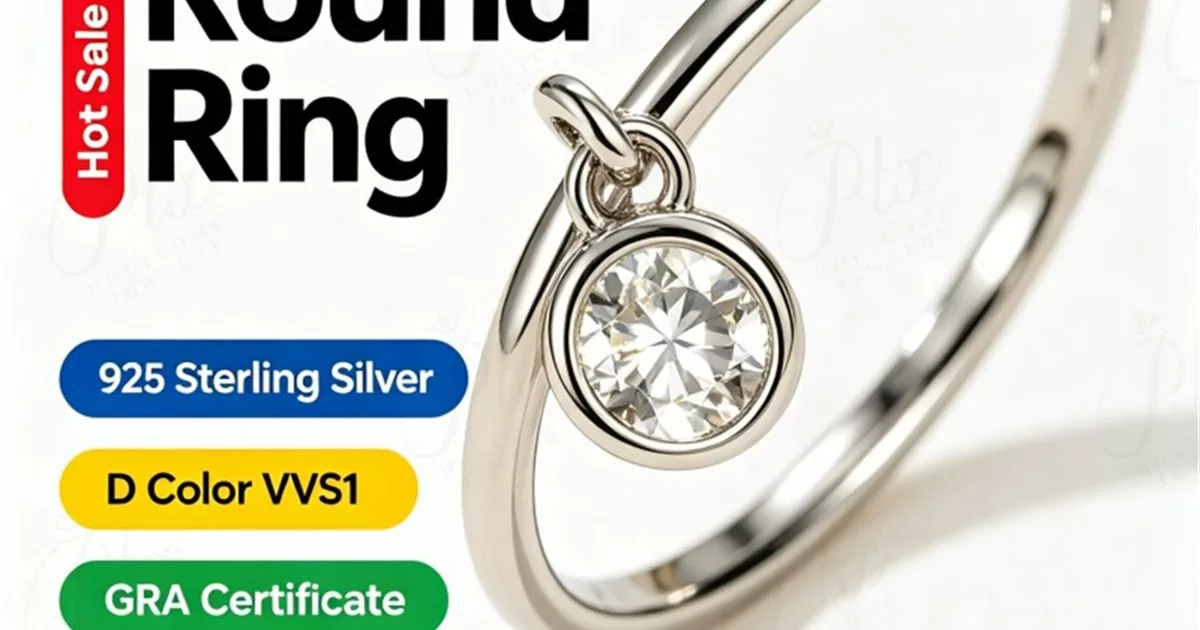
GRA (Gem Research Association) reports accompany the large majority of loose moissanite rounds sold from Chinese factories. The report lists carat, colour (typically D-E-F), clarity (typically VVS-VS), cut (excellent) and a laser inscription on the girdle matching the report number. In practice, GRA is the wholesale standard: it is what factories attach, what buyers cross-check with a loupe and girdle inscription, and what most B2B buyers accept for price bands below retail diamonds. Its limitation: GRA is not GIA-tier independent grading, so treat it as a factory-issued document to be verified, not as a warranty.
IGI: the credible third-party step-up
IGI (International Gemological Institute) independently grades lab-grown diamonds and some moissanite lines through its own labs. An IGI report costs USD 25-60 per stone extra at the factory level, which moves wholesale price up by roughly 8-15%. IGI paper makes sense when: your retail price point is above USD 400 per stone, your customer explicitly names IGI, or you are selling lab-grown diamonds rather than moissanite. For commodity moissanite under 2 carats, the price premium rarely returns in retail margin.
Which certificate to stock in 2026
Match the paper to the retail tier. Entry and mid-tier moissanite: GRA with girdle inscription, verified by the supplier's factory audit — see how to confirm the supplier is a real factory, not a trader. Lab-grown diamond lines: IGI. Any line marketed as "diamond" without qualification must carry independent grading; under FTC 16 CFR Part 23, mis-describing a simulated stone is an actionable violation. And because certificate choice moves cost, reprice the whole line with the wholesale-to-retail margin formula before committing. For trend buying, the 2026 wholesale trends guide shows which moissanite shapes are actually moving at retail right now.
How to verify a GRA report
Ask the supplier for the girdle inscription photo under 10x magnification, cross-check the report number against the lab's verification channel, and pull one stone from a sample order to a local gemologist for a refractive-index check (moissanite's RI is distinctly higher than diamond's). Budget USD 30-80 per check. If the supplier refuses an inscription photo, that is your exit signal.
What the grade letters actually buy you at wholesale
Moissanite is sold in roughly three commercial bands. D-F VVS stones cut as excellent rounds are the "forever one" band — bright, clean, priced at the top of the wholesale sheet. G-H VS stones are the volume band, visually near-identical to the naked eye and usually 10-20% cheaper. I-J SI stones exist mainly for budget settings and small sizes under 0.5 carat. The certificate band matters less than the physical stone: a GRA D-F report on a cloudy stone is worth less than an ungraded G-H stone with a clean table. Always buy the sample before buying the paper, and never pay the D-F price for a stone the supplier describes as "near-colorless."
FAQ
Does GIA grade moissanite?
No. GIA grades natural diamonds, coloured stones and pearls. Any "GIA moissanite certificate" listing is mislabelled — treat the supplier's compliance as suspect under 16 CFR 23.
Is a GRA certificate good enough for retail?
Yes for entry and mid-tier moissanite sold with honest moissanite disclosure, a girdle inscription, and a verified report number. It is not enough if your customer expects diamond-level independent grading.
Should we pay extra for IGI on every stone?
No. Pay for IGI only above your retail price threshold (commonly USD 400+ per stone) or when your channel demands it. The 8-15% cost premium does not return on sub-2-carat commodity moissanite.
Can we private-label our own certificate?
You can issue a branded supplier report describing stone specs, but you cannot imply independent lab grading you do not have. Keep lab names exactly as they appear on the actual report — that is the FTC-compliant line.
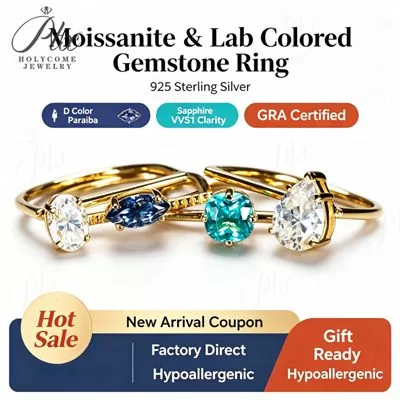
HOLYCOME supplies loose moissanite and finished settings with GRA reports and girdle inscriptions, optional IGI upgrades on lab-grown lines, and full stone disclosure paperwork. Ask for the current moissanite price-per-carat sheet and certificate samples.