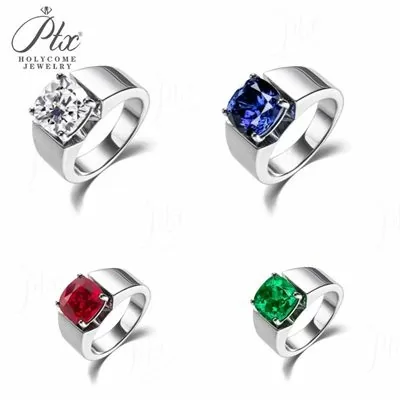
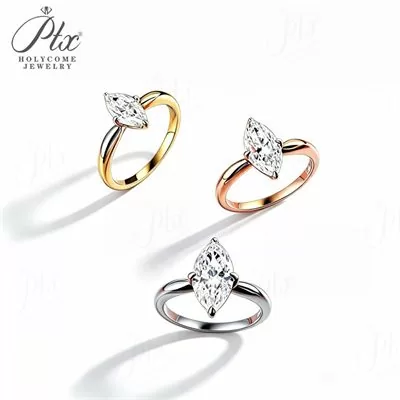
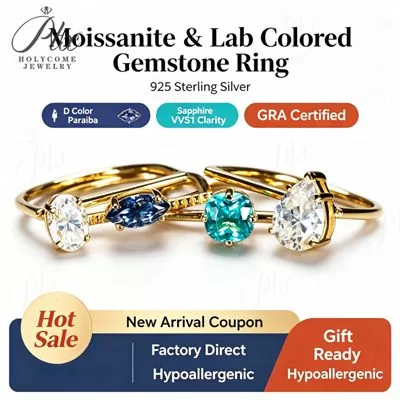
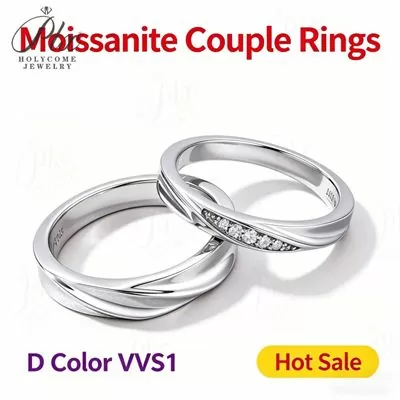
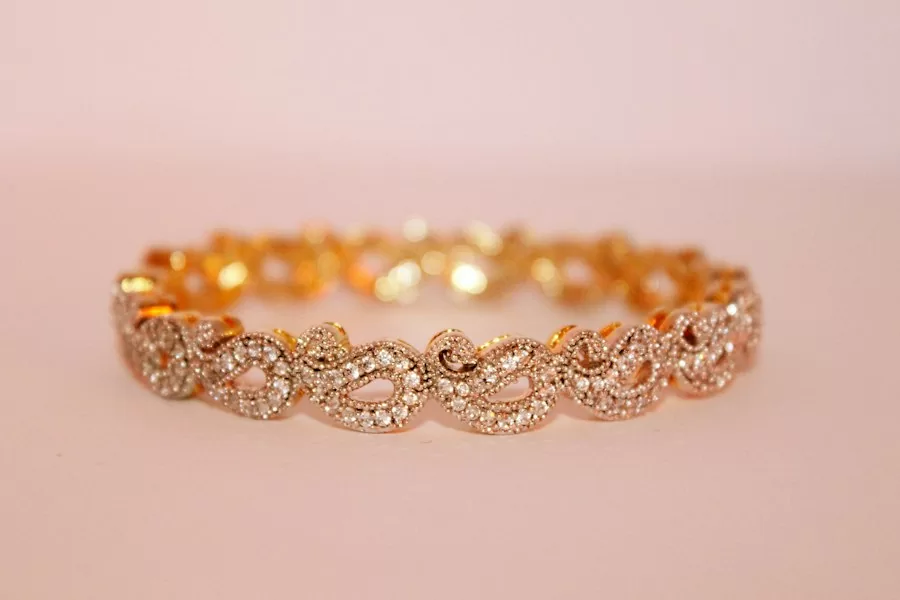
Moissanite
Answering the Ethical Questions Moissanite Buyers Actually Ask
Ethical claims sell moissanite, but only when they are accurate. This is how to answer the questions shoppers actually ask at the counter.
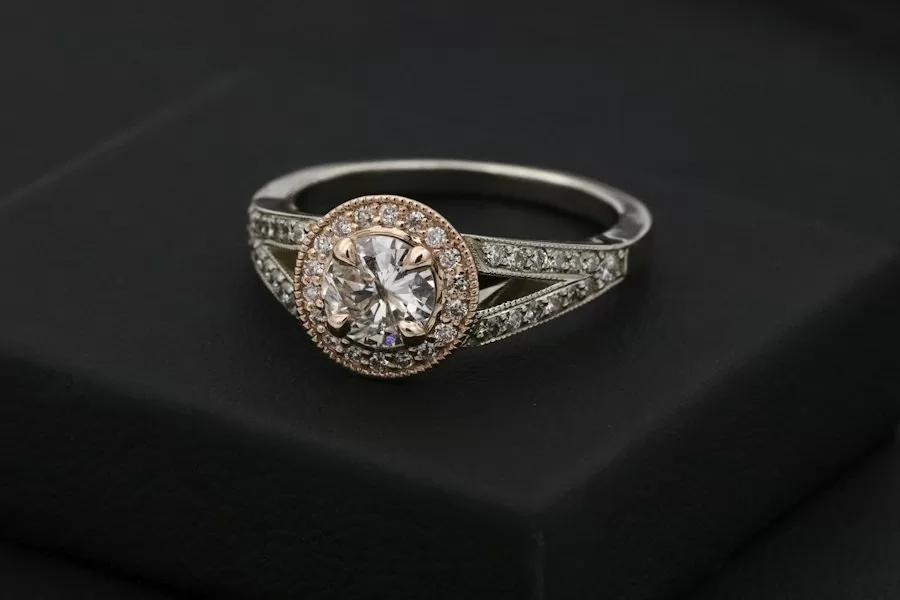
Shoppers who walk up to a moissanite counter rarely ask about color grades first. They ask a quieter, harder question: Is this stone actually the kind of purchase I can feel good about? That question sits behind almost every hesitation, every second opinion, and every customer who leaves to think about it. Retailers who can answer it plainly, without hype, close more moissanite sales than retailers who lead with size and price. This is the honest Q&A your team needs, organized around the questions buyers actually ask.
"Is moissanite a real diamond?"
No, and you should never imply that it is. Moissanite is a separate gemstone, silicon carbide, first discovered in a meteorite and now grown in controlled lab conditions. It shares the diamond's hardness class on everyday wear but is its own material with its own optics. Saying it looks like a diamond is fine. Saying it is one is a misrepresentation that will cost you the sale the moment the customer reads a comparison online.
The honest framing works better anyway. Moissanite refracts light more strongly than a diamond, which is why it flashes brighter in bright rooms. Customers who understand that difference are choosing it on purpose, not settling for it. That choice builds loyalty, and it is the same position we describe in moissanite versus lab-grown for wholesale buyers.
"Where does it actually come from?"
Genuine commercial moissanite is grown in laboratory reactors through a controlled crystallization process. It is not mined, and it is not dredged, and that is the ethical core of the story. There is no artisanal-mining controversy, no conflict-region supply chain, and no open-pit footprint attached to the stone itself.
Be careful not to overreach. The ethical story is about the stone, not automatically about the whole piece. The silver or gold the stone is set in still comes from a supply chain with its own practices, and the factory that mounted the stone has its own labor story. A credible retailer acknowledges those layers rather than pretending the entire ring is conflict-free by default.
"Is it just cubic zirconia with a nicer name?"
This is the most common objection, and it deserves a direct answer. Cubic zirconia is a simulated diamond material that scratches, clouds, and dulls within months of daily wear. Moissanite is an entirely different compound, second only to diamond in measured hardness among common consumer gemstones, and it holds its polish and clarity for years. The two look similar at arm's length in a glass case; they do not look similar after a year on a hand.
You can demonstrate this at the counter. Hold a known CZ piece and a moissanite piece side by side under direct light. The moissanite will show stronger, more colorful dispersion; the CZ will look flatter. That visual does more than any brochure. We break the price-positioning math down in moissanite versus cubic zirconia positioning.
"Will it hold its value later?"
This is where honesty matters most. Moissanite is bought and worn for the pleasure of the stone, not as an investment. Resale value on a mounted moissanite piece is close to nominal, just as it is on most mounted fashion and bridal jewelry. Telling a customer otherwise sets up a future disappointment and a bad review.
The reframe is the value the customer gets while wearing it. A ring she loves, that costs a fraction of a mined or lab-grown solitaire, that she can wear without insurance anxiety, is a strong value proposition on its own. Compare that to the resale economics of lab-grown diamonds if a customer is weighing the two; the honest picture helps her choose the stone that actually fits her life.
"How do I know I'm getting real moissanite?"
Counterfeit moissanite exists, and a customer who has done a single Google search already knows it. Tell her what to look for: a refractive index meter reading that is distinct from diamond, a thermal conductivity response different from diamond, and a certificate packet from a known grower. Your store should be willing to show the certificate at the counter, not keep it in a drawer.
This is also where supplier trust matters. We walk through the verification steps in how to verify a moissanite supplier. If your own source is clean, you can answer this question with confidence rather than a deflection.
"Is it too good to be true?"
This is the real question underneath all the others, and the answer is no, with one caveat. The price advantage is real because moissanite is not rare; it is a manufactured material at industrial scale. That is not a weakness, it is the business model. The caveat is that the price advantage depends on the quality of the cut and the grading of the stone. A poorly cut moissanite at a low price looks like a cheap sparkler. A well-cut moissanite at a fair price looks exceptional.
Stock the stones your supplier can stand behind, display the best cutters in your case, and let the visual do the work. Customers who feel good about their purchase, and who trust the person who sold it to them, come back for anniversaries, gifts, and engagements. That repeat business is the actual return on an honest sales approach.
Bottom line
Ethical selling in moissanite is not about a louder slogan. It is about answering the questions customers are already asking, accurately, the first time. Be clear about what the stone is, where it comes from, what it is worth, and what it is not. Shoppers can feel the difference between a pitch and an honest explanation, and they reward the latter with trust and referrals.
Authoritative References
For buyers who need to verify the technical and regulatory basis of this guide, the following independent institutions publish authoritative reference data:
- GIA Gem Encyclopedia - independent grading and identification reference for natural and lab-grown gems.
- Wikipedia: Moissanite - peer-reviewed background on moissanite chemistry, optics and history.