Moissanite
Moissanite Hardness and Durability: A Retailer FAQ for Bridal Sales
Bridal customers ask whether moissanite will last. The short answer is yes, but your sales team needs the right durability facts to answer confidently.
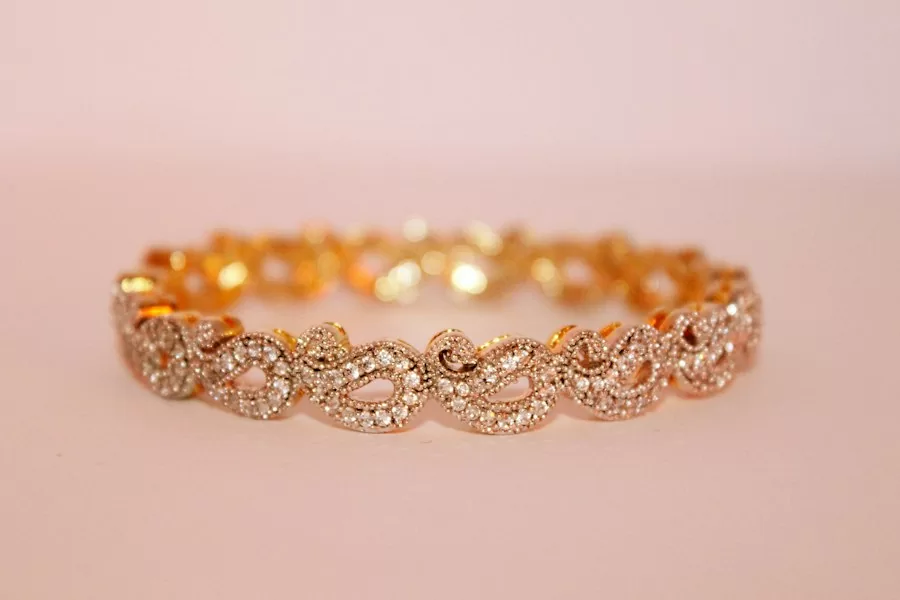
A bridal shopper hovering over a moissanite engagement ring usually has one quiet fear: will this stone still look like this in twenty years? That question is about durability, and it is the one most likely to end the sale if your staff answers it vaguely. Moissanite is one of the most wear-resistant gemstones on the market, but retailers need precise facts, not adjectives, to close the sale and to set honest customer expectations.
Where moissanite sits on the Mohs scale
Diamond is the reference point at 10 on the Mohs scale. Natural sapphire and ruby sit at 9. Moissanite lands at roughly 9.25—above sapphire, well above cubic zirconia at 8 to 8.5, and far above glass or crystal simulants. What that means in practice is simple: moissanite resists scratches from the everyday materials a hand actually meets. Keys in a purse, a kitchen sink, a laptop keyboard, a trip to the gym—none of these scratch a properly set moissanite.
The honest caveat is that only a diamond scratches a diamond, and only a diamond or another moissanite will scratch moissanite. That is an extremely high bar for normal life. It is also worth telling customers that scratch resistant is not scratch proof: a sharp blow against concrete or metal can chip a thin facet edge, which is a fracture event rather than a slow wear event.
Will prong tips wear down over time?
Yes, and this is the single most useful durability fact for bridal staff. Because moissanite is nearly as hard as a diamond, it does not abrade inside its setting the way a softer gemstone would. Instead, over years of daily wear, the metal prong tips that hold the stone take the friction. The stone stays bright; the prongs thin.
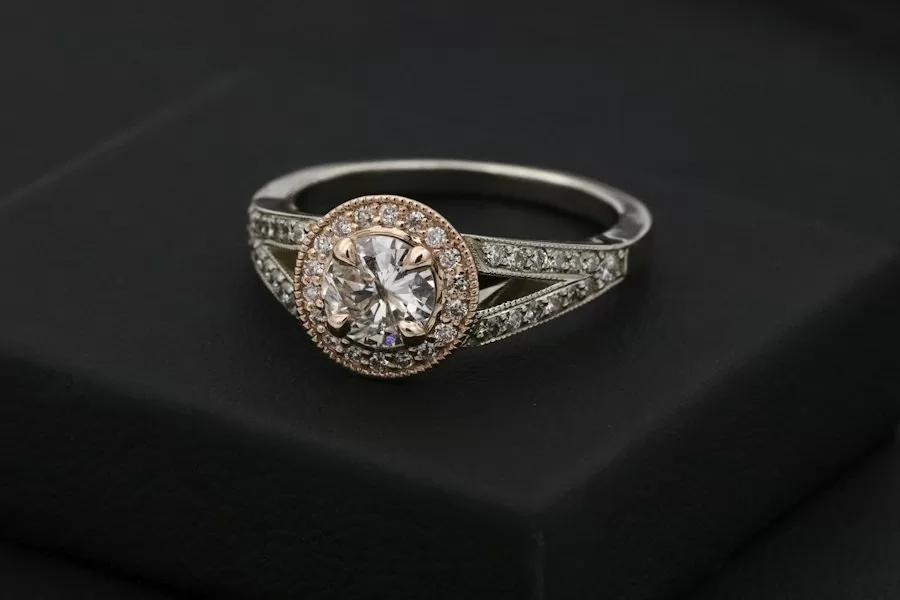
The professional recommendation retailers should give customers is the same one fine jewelers give diamond buyers: an inspection and prong check every six months to a year, with a light re-tip when the prongs get thin. A well-built moissanite engagement ring setting from a reputable supplier uses proper wall thickness and round-tipped prongs, which slows that wear substantially. Selling this inspection habit up front turns a future service call into a planned appointment—and a reason the customer comes back.
Cleaning: ultrasonic, steam and at-home care
Moissanite is safe in ultrasonic cleaners, which is good news for retail counters. Most jewelry stores run fine jewelry through an ultrasonic bath with mild solution, and moissanite tolerates it. Steam cleaning is generally acceptable on a secure setting, though staff should avoid steam on stones that are already loose.
The at-home message to customers is deliberately simple: warm water, a drop of mild dish soap, a soft brush under the stone, rinse and pat dry. An occasional wipe with a polishing cloth keeps the metal bright. Customers should skip toothpaste (abrasive) and household bleach or chlorine, which attacks the metal mounting over time rather than the stone. We covered the broader side of this in retail staff training for selling moissanite, where language accuracy protects both the sale and the warranty.
The heat and chemical reality
Unlike organic gems such as pearls or emeralds, moissanite is a laboratory-grown silicon carbide crystal with no organic material to damage. It does not swell, fade, crack from heat, or change color under normal lifestyle exposure. Hot tubs, tanning beds, hand sanitizer and perfume will not harm the stone itself. What they can harm is the plating on a silver or fashion mounting—another reason to remind customers that the metal setting, not the gemstone, is the part that benefits from care.
How it compares at the counter
Shoppers occasionally ask how moissanite compares to a lab-grown diamond on durability, and the honest answer is that both are extremely hard and both are eminently wearable. The practical differences show up in light behavior and price, not in long-term wear. Moissanite carries more fire; a lab diamond carries more classic white brilliance. Telling customers this calmly removes the pressure to oversell either stone and lets the budget and aesthetic decide. A customer who understands durability will wear either stone for decades, and the inspection habit applies to both.
The three questions staff should memorize
First: will it scratch? No, not from normal daily life; only a diamond can scratch it. Second: will it chip? Only from a sharp, hard impact, which is true of nearly every gemstone; a strong setting minimizes the risk. Third: will it change color over time? No, moissanite does not cloud, fade or yellow with age, and it is not treated or oiled the way some natural gemstones are.
Confidence on those three answers is what converts a window-shopper into a bride. When the durability story is told accurately, moissanite earns its price and its place in the case. When it is overpromised, it returns as a warranty claim. Get the facts straight, and the stone sells itself.
Authoritative References
For buyers who need to verify the technical and regulatory basis of this guide, the following independent institutions publish authoritative reference data:
- GIA Gem Encyclopedia - independent grading and identification reference for natural and lab-grown gems.
- Wikipedia: Moissanite - peer-reviewed background on moissanite chemistry, optics and history.