Moissanite
Pear and Oval Moissanite Buying Guide for Wholesale Retailers
Pear and oval moissanite sell hard but are unforgiving. Here is the cut detail that decides whether the stone sells or comes back.
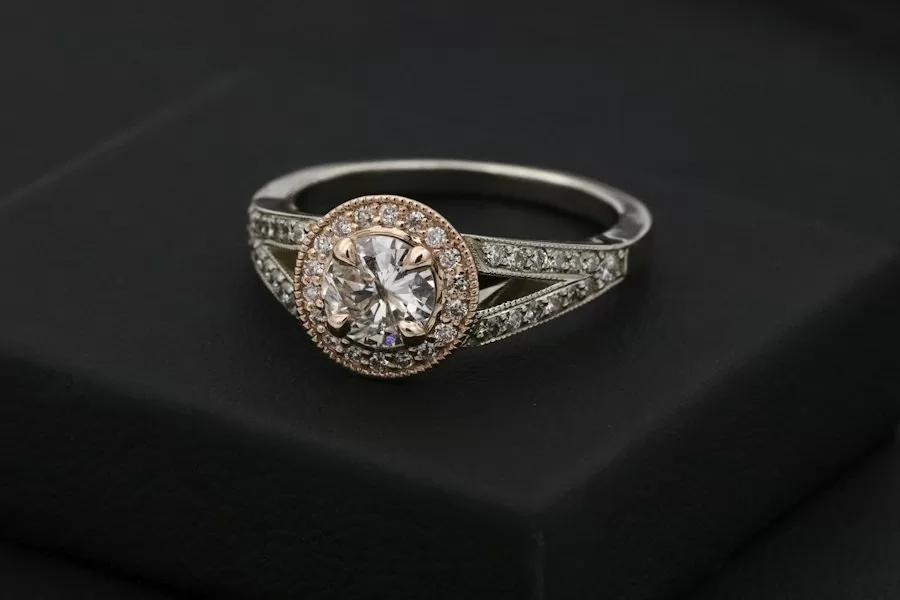
When retailers move beyond the round solitaire, the two cuts that dominate the moissanite conversation are the pear and the oval. Both read larger than a round of the same carat, both photograph beautifully, and both have earned their place in the bridal case. But they are not forgiving the way a round is, and a poorly cut pear or oval moissanite exposes exactly why cut quality matters more than any other grade. Buying these cuts wholesale means inspecting the stone, not just the certificate.
Start with why these cuts sell. The oval offers an elongated finger-lengthening effect that flatters most hand shapes and carries a softer, more modern look than a round. The pear blends the round's softness with a tapered point that feels bridal and distinctive, and it has long been a favorite for customers who want something recognizable without being conventional. Both cuts give you more visible size per carat, which is a powerful retail message at a price point already well below mined diamond.
The details that decide quality
An oval's biggest tell is the bow-tie—a dark, horizontal shadow across the center of the stone caused by facet alignment. Every oval has some bow-tie; the question is whether it is subtle enough to disappear in normal light or obvious enough to read as a flaw. Inspect the stone face-up under a light similar to where it will be sold. A faint bow-tie is acceptable; a heavy one is inventory that will come back.
A pear's biggest tells are symmetry and the point. The two halves of the pear should mirror each other, and the tip should be centered, clean, and protected in the setting. An off-center point breaks the whole silhouette. Because the pear's tip is the most exposed part, it chips more easily than a round, which is why a protective setting ( Cathedral, halo, or a V-prong at the tip) matters more here than for any other cut.
Color and clarity by cut
Elongated cuts show color more readily than rounds, especially near the ends. A moissanite that looks clean in a round may show a faint tint in a pear or oval under bright light. That is why buyers step up a color grade for these cuts—aim for near-colorless rather than a lower grade—even when the round in the same lot was acceptable. Clarity is less of a concern in good moissanite, but eye-clean remains the standard; check the stone, do not rely on the grade line.
Our moissanite color grade guide and clarity grade guide walk through the grades in detail, including why elongated cuts demand a stricter read than rounds.
Settings that flatter the cut
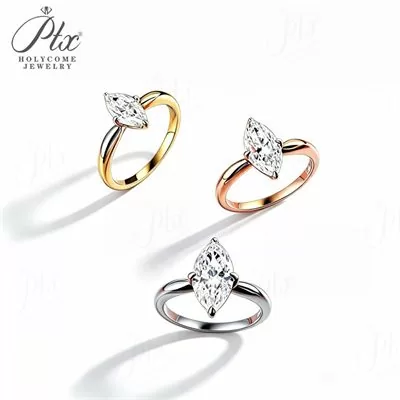
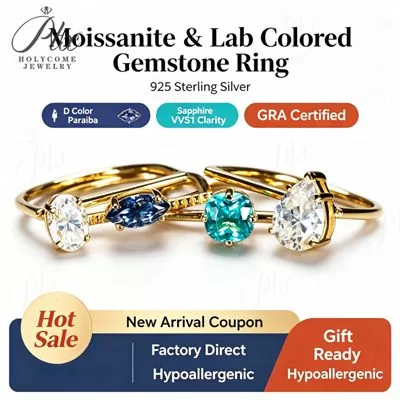
Ovals pair naturally with halos and with slim east-west settings that lean into the elongated shape. Pears pair beautifully with bypass solos and vintage-inspired settings that echo the point. Whatever the setting, match the prongs to the stone: slender prongs for a delicate oval, and protective pronging for a pear's tip. A setting chosen purely for looks without cut protection is a warranty claim waiting to happen.
How to buy the lot
Order the exact stones you will sell. Unlike rounds, where you can buy a matched parcel and trust it, pear and oval lots should be hand-selected. Ask the supplier for face-up photos or video of each stone in the intended cut, confirm the bow-tie level, and approve the pre-production sample before bulk. The small extra effort is what separates a retailer whose pear rings sell on sight from one whose customers compare them to a round and walk away.
Stock a modest range—two to three sizes in oval, one or two in pear—and let your customer mix tell you which way to lean. Done well, these two cuts become the pieces customers remember and recommend, because they look like nothing else on the market at that price.
Setting expectations at the sale
Because elongated cuts photograph longer than they measure, set the customer's expectations honestly about size in millimeters rather than carat. A 1.2-carat oval reads large on the hand, and a customer who understands the millimeter dimension is happier than one who expected a round of the same carat. Mention the bow-tie and the protected pear tip plainly, so a faint shadow reads as the characteristic of the cut rather than a defect. Customers who are told in advance forgive the small idiosyncrasies; customers who discover them on their own feel misled. Pair that honesty with a care note about avoiding impacts on the pear's tip, and the piece will stay in shape for years. The retailers who sell these cuts best are the ones who explain them well, not the ones who simply display them.
Authoritative References
For buyers who need to verify the technical and regulatory basis of this guide, the following independent institutions publish authoritative reference data:
- GIA Gem Encyclopedia - independent grading and identification reference for natural and lab-grown gems.
- Wikipedia: Moissanite - peer-reviewed background on moissanite chemistry, optics and history.