Moissanite
Prong Settings and Stone Security in Moissanite Rings: Cutting Returns
A loose center stone is the worst kind of jewelry return. Choosing the right setting style and inspecting its prongs prevents the problem before it reaches the customer.
The most expensive return a jeweler can handle is a lost center stone. A customer wearing a moissanite engagement ring who feels the stone shift, or who notices it gone after a month, does not return a ring — she returns trust, and she tells friends about it. Setting quality is the factor that determines whether a stone stays put, and it is one of the easiest things to evaluate when you buy wholesale, if you know what to look for.
Moissanite is durable and hard, but it is held in place entirely by the metal around it. No matter how well cut the stone is, a weak setting lets it move, and once a stone loosens it rarely tightens itself. Here is how to choose settings that protect your customers and your reputation, and how to inspect a sample before you commit to a bulk order.
The common setting styles and their security trade-offs
A four-prong solitaire is the most open and elegant look, letting light enter from the sides for maximum brilliance, but four points of contact mean each prong carries more load. A six-prong setting spreads that load and is the traditional recommendation for active lifestyles; it slightly covers more of the stone but adds real security. A bezel setting wraps a metal rim around the stone's edge, making it the most secure option of all and a favorite for people who work with their hands or exercise in their jewelry. A cathedral setting lifts the stone on angled shoulders for height and shadow, which is beautiful but puts slightly more stress on the prong tips. Match the setting to the customer's lifestyle, not just her taste, and you will preempt a category of returns before they happen.
Inspect the prongs on your sample
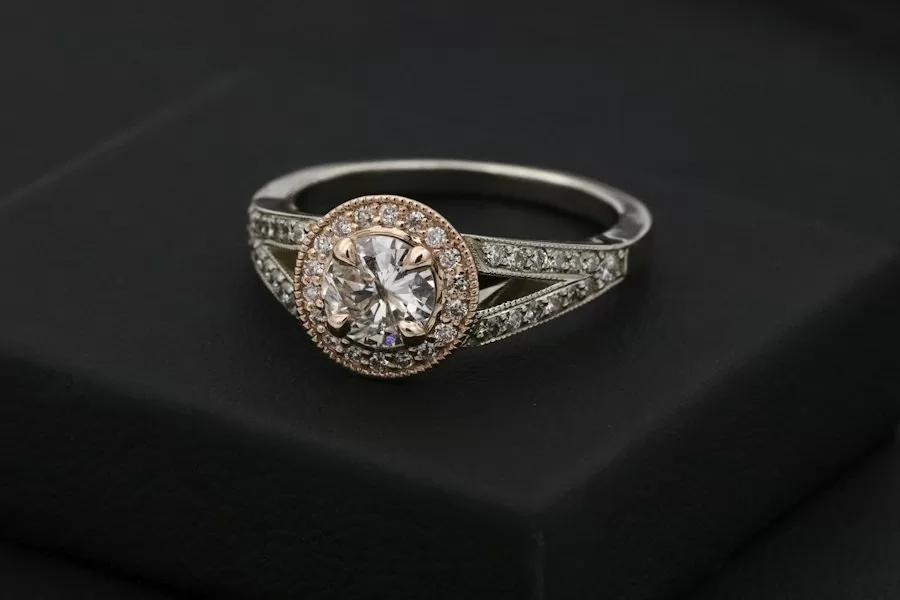
When a sample arrives, look straight down at the center stone. The prongs should be evenly spaced, smoothly tapered, and curled neatly over the stone's crown rather than ending in a blunt nub. Gently wiggle the stone with a wooden stick or the eraser end of a pencil — never with metal, which can chip the girdle — and it should not move at all. Run a fingernail along each prong tip; sharp, ragged tips catch on hair and clothing, a sign of rushed finishing that a customer will feel the first time she puts the ring on. Consistent, polished, evenly sized prongs are a reliable tell that a factory takes setting seriously rather than rushing heads out the door.
Check the basket and under-gallery
Security is not just on top. The basket beneath the stone should be well soldered with no open gaps where the setting can flex. A loose or thin under-gallery lets the whole head wobble even when the prongs look fine, and that wobble works a stone loose over months. For lower-profile or everyday pieces, ask whether the factory uses reinforced baskets or hidden side accents that brace the center stone from the side. A quick shake of the ring held to your ear should produce no faint rattle; a rattle means something inside is already loose.
Pair settings with a care promise
Even the best setting benefits from periodic checks. Retailers who sell moissanite engagement rings often offer a free prong-tightening and cleaning check at the one-year or five-year mark. It costs almost nothing in labor, generates a valuable return visit, and catches loosening before a stone is lost. Position the setting style honestly in your product copy: a high four-prong solitaire looks spectacular but is not the best choice for a customer who gardens daily, works in a shop, or never takes her ring off. Steering the right customer to the right setting is the mark of an expert seller.
Document your security standard
When you place a bulk order, note in writing that stones must be tight and prongs flush, and reject any production sample that rattles or wobbles. A factory that knows you inspect head security will build it in consistently, while one that assumes you only check the stone's appearance will cut corners on the parts customers cannot see until it is too late.
Stone security is invisible until it fails. Choosing solid settings and inspecting prongs on samples is the cheapest insurance policy a wholesale buyer can carry, and it protects the trust that a bridal business runs on.
Make prong inspection a standing step in your receiving routine, not a one-time sample check. Open one random ring from each bulk carton, shake it, and look at the head under magnification before the stock hits the case. A factory that passes on samples but slips in production will reveal itself quickly, and catching it at the dock means a rejected shipment rather than a returned customer. Consistency in receiving is what turns good sample quality into good customer experience at scale.
Authoritative References
For buyers who need to verify the technical and regulatory basis of this guide, the following independent institutions publish authoritative reference data:
- GIA Gem Encyclopedia - independent grading and identification reference for natural and lab-grown gems.
- Wikipedia: Moissanite - peer-reviewed background on moissanite chemistry, optics and history.