Moissanite
Side Stones and Accent Moissanite: Stocking Halo and Three-Stone Rings
Side stones transform a center moissanite from modest to magnificent, but they add cost, setting complexity, and matching requirements buyers must plan for.
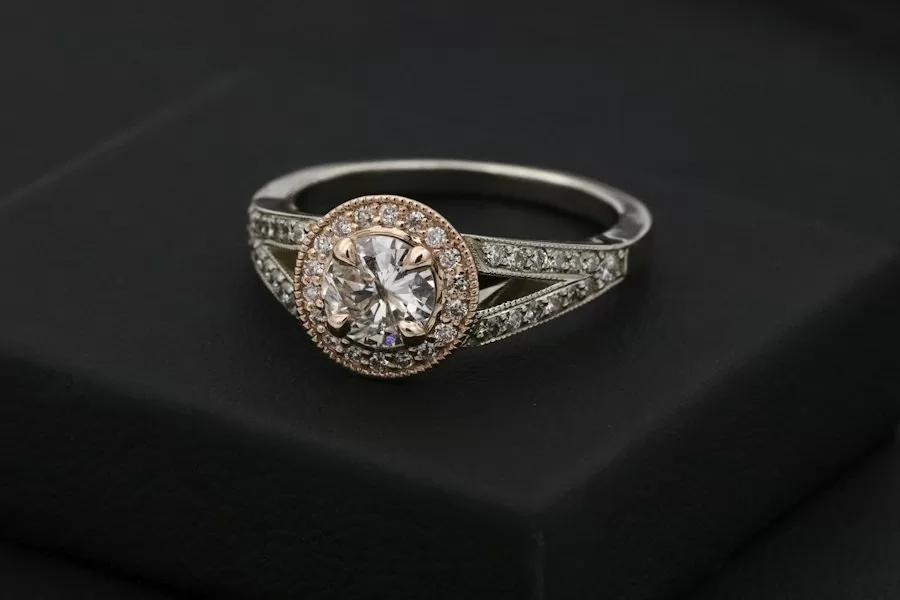
A 1-carat equivalent moissanite solitaire is already a striking ring. Add a halo of smaller stones around the center, or a pair of tapered accents on the shoulders, and the visual size jumps dramatically for a fraction of what upgrading the center stone would cost. That is why halo, three-stone, and pavé-accented designs dominate the bridal bestseller lists — and why wholesale buyers need to understand how side stones change both the economics and the quality check before they reorder.
Why side stones punch above their weight
The human eye judges a stone's size by its total spread across the finger, not by its carat weight. A halo of tiny moissanites around a 6.5mm center makes the whole ring read as a much larger, more expensive piece from across a room. The accent stones also add light and movement that a bare solitaire cannot match, catching the eye as the hand moves, and they do so at a cost far below increasing the center carat weight. For customers who want presence on a budget, an accented design is often the smart answer, and it is one many buyers arrive at only after trying on a plain solitaire.
The three designs worth stocking
The halo ring is the volume seller: a circle of pavé stones framing the center, available in classic round, cushion, and oval halo variants to match popular center shapes. The three-stone ring carries strong emotional meaning — past, present, future — and appeals heavily to engagement and anniversary buyers, with two matching side stones flanking the center. The stackable pavé band, with small stones set along the shank, sells both as a wedding band and as a standalone fashion ring, and pairs beautifully with solitaires to build a full bridal stack. Carrying a balanced mix of all three covers most bridal requests without overcommitting to any one trend.
Matching is where quality is won or lost
Accent stones are only as good as their match. Mixed-color side stones — some bright white, others faintly gray or green — cheapen an otherwise beautiful ring instantly, and the customer will notice it in daylight even if she cannot name why. When you source moissanite for accent settings, confirm the factory grades the center and side stones to a consistent color tier so the whole ring reads as one piece. This is especially visible in three-stone designs, where the side stones sit right next to the center under the customer's eye, and in halos, where a ring of mismatched stones is impossible to ignore.
Watch the setting integrity
More stones mean more prongs or pavé beads, and more holding points mean more places that can catch and loosen. Pavé stones set into a thin band are especially prone to loss if the beads holding them are undersized or poorly closed. Inspect sample rings under a loupe: each accent should be securely cupped, and the pavé beads should be smooth and fully closed over the stone edge rather than merely touching it. A ring with fifty tiny stones that sheds them on the first wearing destroys trust faster than a simple solitaire ever could, and each lost accent is a repair visit that costs you time and goodwill.
Price and position them correctly
Because accented rings use more total stones and more skilled setting labor, they carry higher wholesale and retail prices than solitaires. Position them as the "premium look" tier in your bridal case, and keep a few clean solitaires alongside for budget-focused customers. The two tiers let you serve the same customer at different life stages and price points: the solitaire for the first engagement, the halo or three-stone for an anniversary upgrade. Cross-merchandise the pavé bands next to both so customers see the complete stack before they decide.
Side stones are the detail that turns a good moissanite collection into a bridal destination, as long as you match the stones to a consistent grade and protect the setting that holds them. Stock them thoughtfully, and they will outperform your plain solitaires on average ticket.
When you reorder, track which accent designs actually sell through rather than guessing from catalog appeal. A halo that looked stunning on the page may sit while a simpler pavé band flies off the shelf, and your second buy should follow the sell-through data. Start each accented style in limited depth so you can test the local market before committing to hundreds of a design that depends on taste. The halo and three-stone tier should grow out of proven demand, not out of what looked best in the supplier's lookbook.
Also think about how the accented ring pairs with a wedding band. A full halo can make finding a flush-fitting band harder, just as a thick three-stone setting may leave a gap. If you sell accented engagement rings, carry matching contour bands or wedding bands designed to sit against them, so the bridal sale closes in two rings rather than one. Coordinating the two lines in your buying plan is what turns a single-ring purchase into a full bridal set.
Authoritative References
For buyers who need to verify the technical and regulatory basis of this guide, the following independent institutions publish authoritative reference data:
- GIA Gem Encyclopedia - independent grading and identification reference for natural and lab-grown gems.
- Wikipedia: Moissanite - peer-reviewed background on moissanite chemistry, optics and history.