Moissanite
Moissanite vs. White Sapphire: Wholesale Buying Guide
White sapphire and moissanite target different customers. Knowing which shopper walks into your store decides which stone to stock.
When a customer walks in asking for "something that looks like a diamond but is not," most jewelers default to moissanite. That is usually the right answer, but not always. White sapphire is a legitimate alternative stone with its own audience, and the two stones are closer in price than most buyers assume. Wholesale stockers who understand the difference can serve both customer types without overcommitting to either.
How the stones look
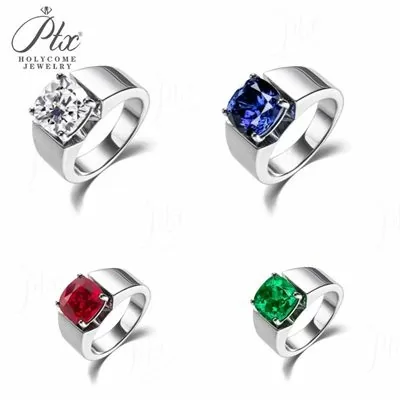
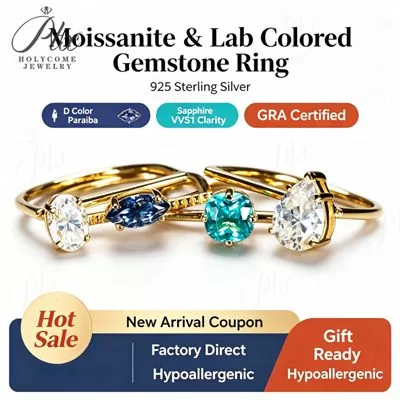
Moissanite is a silicon carbide gem. It has a refractive index higher than diamond, which means it returns more white light and more colored fire than any other common alternative stone. Even at smaller sizes, moissanite sparkles hard and reads bright under store lighting.
White sapphire is a corundum gem, the same mineral family as ruby and blue sapphire. Its refractive index is much lower than moissanite's. In a typical store light, white sapphire looks soft, even milky, and it does not throw the rainbow flashes moissanite is known for. Some customers love that softness; others think it looks dull.
Who buys which stone
Moissanite customers usually want a stone that reads diamond-adjacent. They compare it directly to a mined or lab diamond, ask about brilliance, and are willing to pay a premium for the look. They are usually shopping for an engagement ring.
White sapphire customers usually want a stone that looks natural and understated. They describe their style as minimalist, vintage, or ethical. They are often shopping for a right-hand ring, an anniversary band, or a gift rather than an engagement piece. Some specifically prefer white sapphire because it does not look like a diamond at all.
Price and margin
At the wholesale level, white sapphire is usually cheaper per carat than comparable moissanite, especially in smaller sizes. Moissanite holds a price floor because of its consistent optical performance and brand recognition. White sapphire, by contrast, varies widely by origin and clarity; lower grades can look cloudy and are hard to retail.
Retail margins on the two stones are comparable once you account for yield. Moissanite sells through consistently but carries a customer expectation of "diamond-like" performance. White sapphire sells at a lower absolute price but with less comparison shopping, which can make its turnover more predictable for stores that understand their clientele.
Durability
Both stones are hard enough for daily wear. Moissanite scores 9.25 on the Mohs scale; white sapphire scores 9. Both outperform cubic zirconia and avoid the scratching issues of softer gems. Moissanite is slightly more brittle and can chip if struck hard on a girdle, while white sapphire is tougher. For a ring worn every day, the difference is minor, but worth knowing if a customer asks.
Disclosure and certification
Both stones require honest disclosure at point of sale. Moissanite is laboratory-created and is usually sold with a certificate; white sapphire can be natural or laboratory-grown, and the origin should be stated. Customers who want natural stones are often choosing white sapphire precisely for that reason. Misrepresenting either stone damages trust far more than the sale itself.
Assortment strategy
Most stores do not need a deep white sapphire program. A small selection—ten to twenty SKUs in classic shapes—is enough to serve the customers who ask for it. Moissanite should remain the center of the alternative-stone case because it has the broader demand. Buyers who stock moissanite wholesale often add a small white sapphire section as a complement, not a replacement.
When to recommend which
If a customer compares the stone to a diamond, pick moissanite. If a customer says they want something quiet, natural-looking, or vintage, pick white sapphire. The two stones are not competitors; they are answers to two different questions. Stocking both signals that you understand your customers rather than pushing one product.
Setting combinations that work
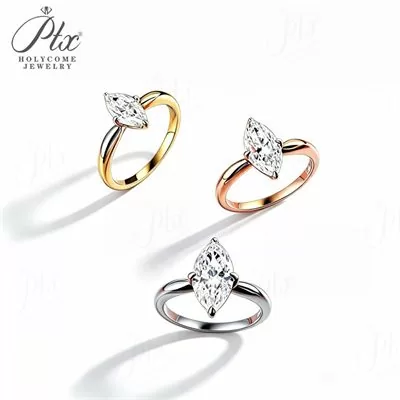
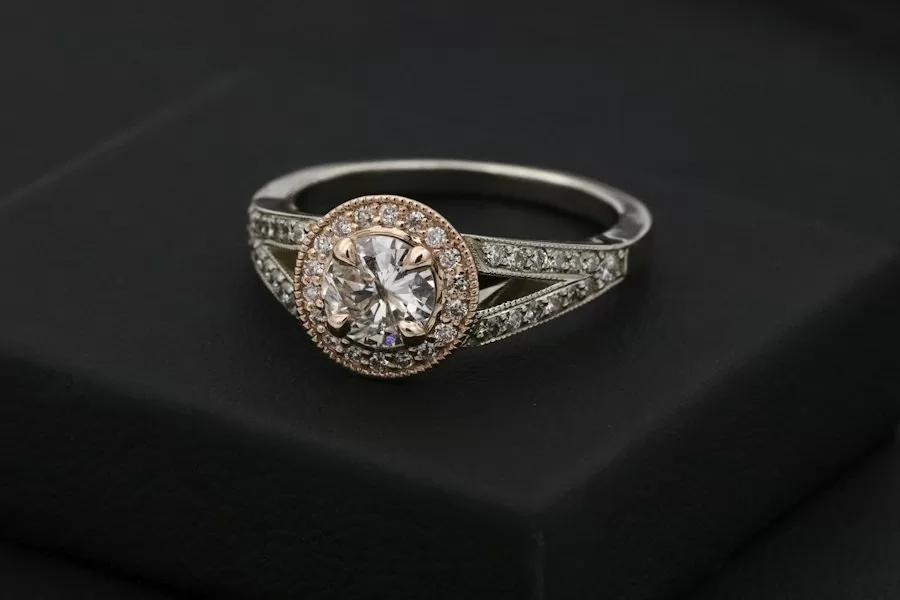
Moissanite carries sparkle best in solitaire and thin-band settings, because the stone does most of the visual work. White sapphire pairs better with halo or pavé settings, where surrounding small stones compensate for the center stone's softer look. White sapphire also sits naturally in vintage-inspired settings, milgrain bands, and yellow gold, all of which reinforce its understated character. Buy the setting and the stone together rather than treating them as separate purchases.
What customers will ask at the counter
Expect one recurring question: "which one lasts longer?" Both are durable for daily wear, but moissanite's higher refractive index means it continues to look bright years after purchase, while white sapphire can show surface wear and lose some of its brightness sooner. Honest disclosure here is the best policy; customers who want the brighter stone over time will choose moissanite, and customers who want the natural look will accept the trade-off. Either way, you avoid the return conversation later.
White sapphire is never going to outsell moissanite, but it has a loyal customer base that is underserved by a case full of bright alternatives. A small, well-chosen selection turns browsers into buyers who might otherwise leave empty-handed.
Authoritative References
For buyers who need to verify the technical and regulatory basis of this guide, the following independent institutions publish authoritative reference data:
- GIA Gem Encyclopedia - independent grading and identification reference for natural and lab-grown gems.
- Wikipedia: Moissanite - peer-reviewed background on moissanite chemistry, optics and history.