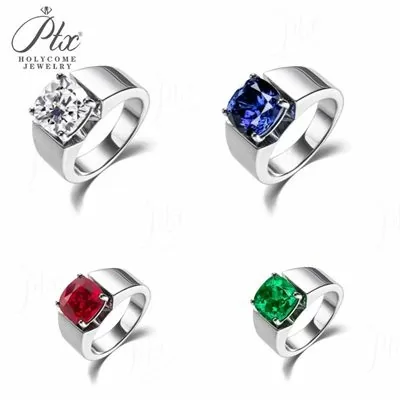
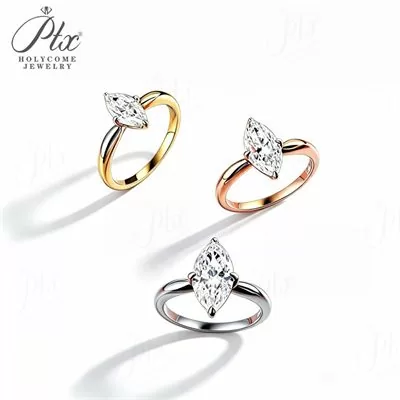
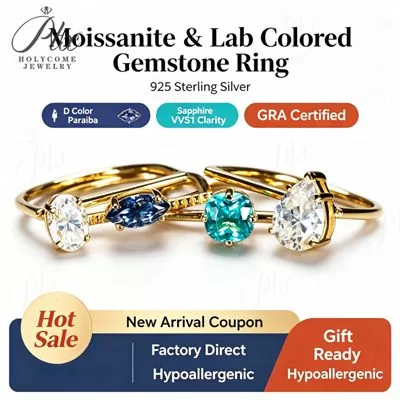
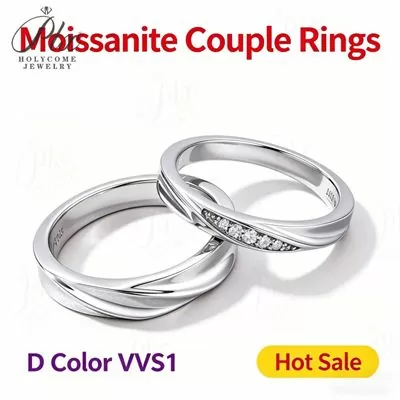
Moissanite
Moissanite vs. White Sapphire: Which Better Fits Your Wholesale Mix?
Moissanite and white sapphire both offer a diamond-adjacent look at accessible prices, but they win on different shelves. Knowing where each one earns its margin helps you buy deeper into the winner.

When a customer says she wants "something that looks like a diamond but costs less," two stones usually come up: moissanite and white sapphire. Both are legitimate, beautiful, and dramatically cheaper than a mined white diamond. They are not, however, interchangeable on your sales floor. The mistake we see most often is stocking one as if it were a straight substitute for the other, then wondering why the margin disappears or the return rate climbs.
Let's break down what each stone actually is, how it behaves on a customer's finger, and where it earns the best margin for a retailer buying wholesale. The goal is not to crown a winner. It is to help you decide how much depth to carry in each.
The optical difference customers actually notice
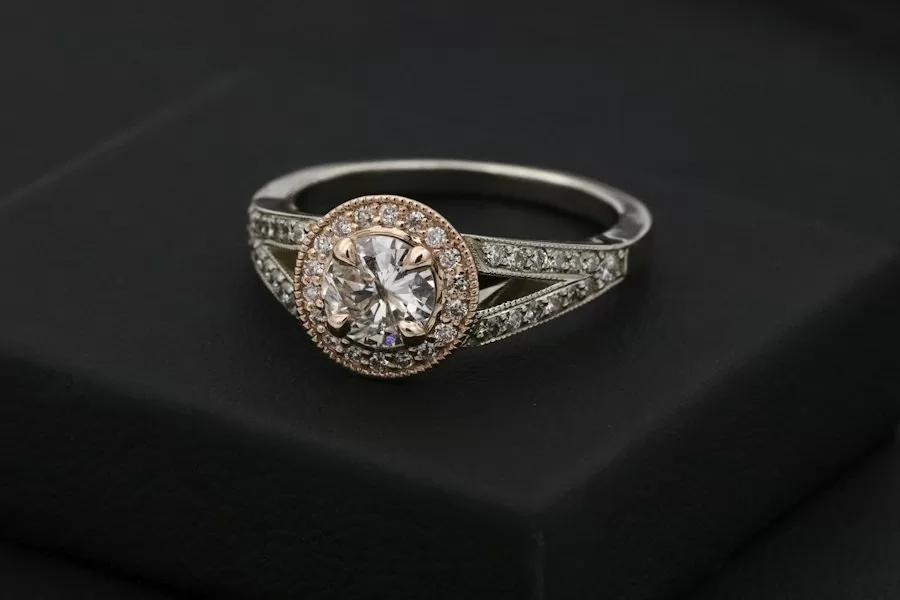
Moissanite is a lab-created silicon carbide with a refractive index well above diamond. That means it throws more light back, and the flashes tend toward rainbow fire rather than the crisp white sparkle people associate with a diamond. White sapphire is a natural (or sometimes lab-grown) corundum. Its refractive index sits much lower, so it looks quieter, whiter, and closer to a "dead" white sparkle. On a ring in a glass case under bright retail lighting, the difference is obvious within ten seconds.
That optical gap is the entire positioning problem. A customer who specifically wants "diamond-like sparkle" and walks out with a white sapphire may feel let down three months later. A customer who wants a low-key, everyday, quietly white stone may find a very fiery moissanite too much. Your staff should know which shopper is which before the stone ever leaves the case.
Durability under daily wear
Hardness is the next conversation, and it matters because it drives warranty returns. Moissanite measures around 9.25 on the Mohs scale. It is extremely scratch-resistant and ranks above ruby and sapphire in toughness. White sapphire sits at 9 as well, so both are eminently wearable. The real durability difference is not scratching; it is edge behavior. Moissanite has sharp, faceted brilliance that holds up for years, while white sapphire, being natural, can carry silk inclusions, windowing, or a softer cut that looks flat in smaller carat weights.
For a retailer, the practical read is this: a one-carat white sapphire can look dull from a distance, while a one-carat moissanite looks alive. That asymmetry is why the price-per-carat comparison is only half the story. A cheap stone that looks flat sells once. A slightly more expensive stone that looks exceptional sells again by word of mouth.
Where the margin lives
Wholesale moissanite pricing per carat is transparent and relatively flat across suppliers once you control for color and grade, which is one reason it scales so well for boutiques and online stores. See our guide on moissanite wholesale price per carat for the current structure. White sapphire is a natural stone, so pricing moves with parcel quality and origin, and the spread between a clean bright parcel and a greyish one is wide. That gives an experienced buyer more upside on white sapphire, but it also gives a careless buyer more ways to overpay for mediocre goods.
If your team is new to colored-stone buying, moissanite is the safer, more predictable rebuild. If you already have a staffer who can grade parcels, white sapphire can deliver a higher turn on a well-chosen buy. For a deeper look at how shoppers compare alternatives at the price ladder, read moissanite vs. CZ cost positioning.
A practical stocking split
We suggest most retailers split the alternative-stone case roughly two parts moissanite to one part white sapphire. Moissanite carries the engagement and gift buyers who want immediate sparkle; white sapphire serves the quieter, more minimalist shopper and the customer who specifically wants a natural stone. Keep a small selection of white sapphire studs and pendants rather than building an entire wall of them, because the natural-stone story is narrower and the quality spread is higher.
Whichever you stock, verify the supplier the same way. Certification, consistent color, and a written grading standard are non-negotiable, as covered in how to verify a moissanite supplier. The same due diligence you apply to moissanite should apply to any white sapphire parcel you take on.
Set expectations on day one
The most profitable alternative-stone retailers are the ones who explain the fire difference up front. A small sign card, a side-by-side light-box, or a thirty-second staff script prevents the "it looked different at home" return. Stock both stones, price each on its own story, and let the customer choose the sparkle level that matches her life. That is how a two-SKU category turns into a repeat-buying department.
Authoritative References
For buyers who need to verify the technical and regulatory basis of this guide, the following independent institutions publish authoritative reference data:
- GIA Gem Encyclopedia - independent grading and identification reference for natural and lab-grown gems.
- Wikipedia: Moissanite - peer-reviewed background on moissanite chemistry, optics and history.