Moissanite
Wholesale Moissanite Wedding Bands: Channel vs Pavé
Matching wedding bands are the natural second sale after a moissanite engagement ring, but the setting style changes everything about durability and price. Channel and pavé bands serve different customers, and smart buyers carry both.
A bridal sale rarely ends at the engagement ring. The moment a customer says yes to a solitaire, the next question is about bands. What goes with this? Do we need matching sets? This is where retailers leave serious margin on the table if they have not planned a moissanite wedding band assortment. Wedding bands are repeat, predictable, and easier to sell than solitaires because the decision is smaller and the emotional pressure is lower. But not all bands are built the same, and choosing between channel and pavé changes who the band suits, how it wears, and how much service work it will generate later.
Channel-set bands: built for daily life
In a channel-set band, small moissanite stones sit in a groove between two raised metal walls, with no prongs sticking up. The stones are protected on the sides, and the band sits flat against the finger. This is the most durable wedding band style for people who work with their hands, lift weights, type all day, or simply dislike thinking about their jewelry. Stones do not catch on fabric, and there are no tiny prongs to loosen.
Channel bands also read slightly more modern and gender-neutral, which helps with both women who want a low-profile band and men who want stone without a flashy look. They cost a little more to manufacture per stone because the channel must be cut precisely, but the after-sales service cost is lower. Fewer loose stones means fewer return visits.
Pavé bands: the romantic sparkle seller
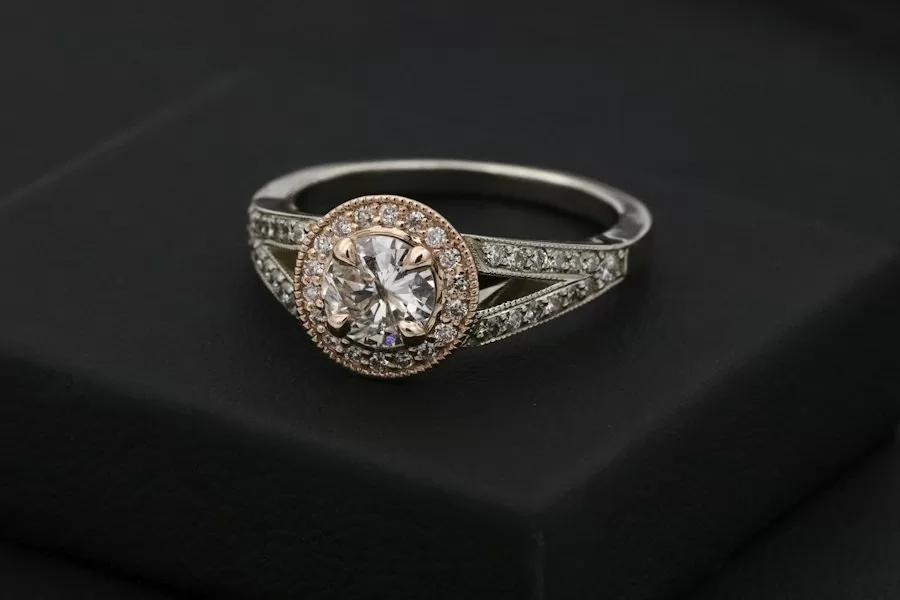
Pavé settings hold tiny stones with micro-prongs or bead heads, so the surface of the band looks like it is paved with glitter. Pavé bands stack beautifully against an engagement ring, and they photograph as bridal jewelry should: romantic, dense with light, unmistakably wedding. For the customer who wants "a little more sparkle on my finger," pavé is the answer.
The trade-off is maintenance. Those tiny prongs can catch on sweaters, gloves, and hair. Over years, pavé bands occasionally lose a micro-stone and need a re-tip or replacement. That is not a reason to avoid them, but it is a reason to price the band with future service in mind and to tell the buyer what to expect. We cover the service-side math in our notes on repair and resize margins, and the same logic applies to plated silver bands.
How to stock both without overbuying
A small boutique does not need every width and metal in both styles. A workable starting assortment looks like this:
- Channel set: 2mm and 3mm widths, in rhodium-plated sterling silver and 14k gold overlay, stocked in sizes 6 through 9.
- Pavé set: 1.5mm and 2mm widths, mainly in silver with white rhodium, stocked in sizes 6 through 8.5.
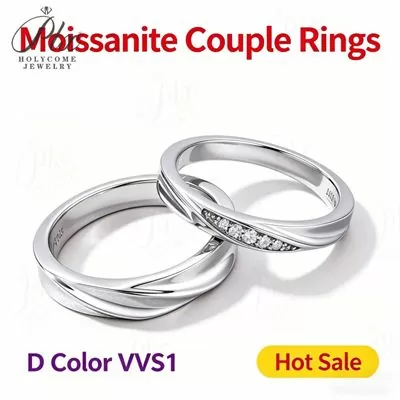
- Men's bands: a slim channel-set silver band in widths 4mm and 5mm for matching couples.
Keep widths narrow at first. Wide bands are harder to size, harder to stack, and slower to sell for new buyers. Read our wider bridal context in wedding ring wholesale buying before you finalize widths and carat weights.
Price and margin strategy
Wedding bands are an add-on sale, which means they do not need aggressive discounting. Most customers buy a band in the same transaction as an engagement ring, and a small bundle discount on a paired set moves volume without eroding margin. Price bands so that the pair (engagement ring plus band) feels like a sensible, complete purchase rather than two expensive decisions. Because moissanite bands cost a fraction of mined-stone equivalents, you can offer that bundle without sacrificing the margin you would lose on a diamond band.
Engraving and personalization as an upsell
Wedding bands are the easiest piece in the case to personalize. A short engraving inside the band turns a standard purchase into a keepsake, and customers rarely balk at the modest fee. Because moissanite bands are more affordable than mined equivalents, couples often have room left in their budget for engraving that they would have spent on a diamond band. Offer the engraving at the point of sale, keep the turnaround under a week, and you add margin without adding inventory. Just be sure your supplier can supply smooth, engraving-ready inner bands rather than textured surfaces that do not take script well.
Match the setting to the customer
The easiest staff script is to ask one question: what does she do for work? If the answer is nurse, chef, teacher, mechanic, or hands-on job, recommend channel. If she works in an office and wants the Instagram look, recommend pavé. Staff who ask this one question sell the right band the first time, which means fewer exchanges and happier couples. That is the whole point of carrying both styles: you are not choosing one winner, you are giving staff a way to match the band to a real life.
Authoritative References
For buyers who need to verify the technical and regulatory basis of this guide, the following independent institutions publish authoritative reference data:
- GIA Gem Encyclopedia - independent grading and identification reference for natural and lab-grown gems.
- Wikipedia: Moissanite - peer-reviewed background on moissanite chemistry, optics and history.