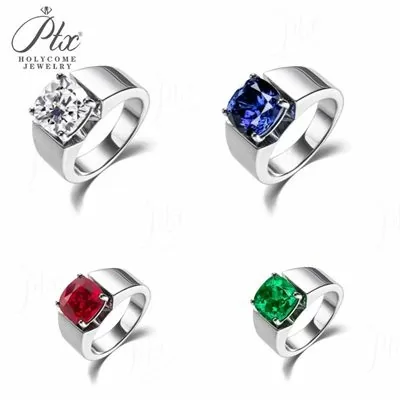
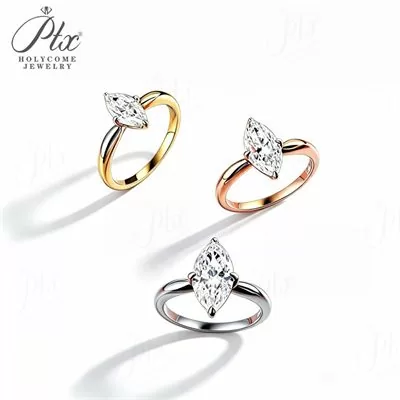
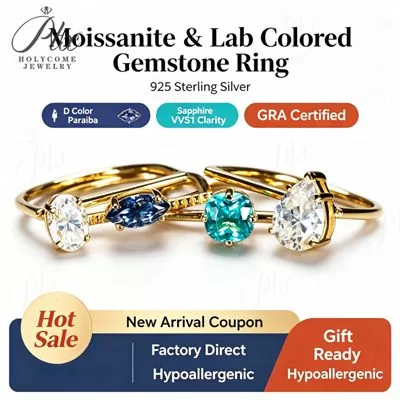
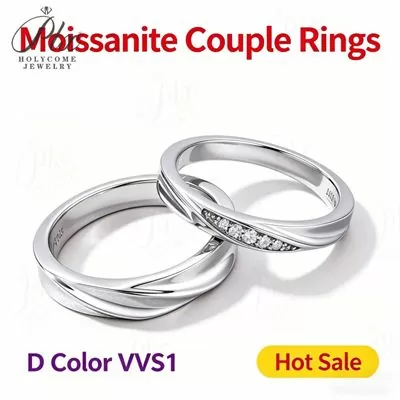
Moissanite
Pairing Moissanite Wedding Bands With Engagement Rings: A Retail Buyer's Guide
A wedding band only sells if it sits flush against the engagement ring already on the customer's finger. Here is how to plan a pairing band program that raises attach rates without excess inventory.
When a customer buys a moissanite engagement ring, the natural next sale is a wedding band that sits beside it. Yet many boutiques lose that second transaction because the band they stock will not sit flush against the solitaire, halo, or three-stone setting they just sold. For a wholesale buyer, the pairing band is one of the highest-margin attach items you can carry, but only if you stock the right silhouettes and display them the right way.
The core problem is geometry. A straight, flat band pushed against a high-set solitaire will leave a visible gap, and against a halo it can actually press the center stone's prongs. Customers who notice that gap walk away, or worse, they return the set weeks later saying the rings "do not sit right." Your job as a retailer is to carry band profiles engineered to solve that exact problem, and to train your staff to look for the gap before the customer does.
Know the three pairing profiles
Start by understanding the shapes factories can produce. A straight band works cleanly only against low, flat settings where the ring shank runs parallel to the finger. It is the easiest band to stock and the most affordable, but it fits a shrinking share of modern moissanite settings. A contour (or curved) band arcs gently inward to follow the base of a solitaire, filling the gap without touching the prongs. A notched band has a deliberate cut-out to clear a cathedral or a raised center stone that a simple curve cannot accommodate. When you plan your buy, assume roughly sixty percent of moissanite solitaires need a contour or notched companion rather than a straight band, and weight your open-to-buy accordingly.
Match metal, tone, and finish precisely
Pairing is not just about shape. A rose gold engagement ring paired with a yellow gold band looks mismatched, and a high-polish band next to a matte shank reads as two unrelated pieces. When you source moissanite engagement rings from Holycome, ask whether the same metal stock and finish are available in the companion band line. Consistent alloy and plating tone is what makes a set look intentional. For sterling silver cores rhodium-plated to a bright white finish, confirm the band receives the same plating thickness so one ring does not yellow or wear faster than the other. A customer who buys a "set" expects the two rings to age together, and a supplier who controls both can guarantee that.
Plan your SKUs by width and shape
Most moissanite solitaires ship on shanks between 1.8mm and 2.5mm wide. Stock companion bands in a matching width range rather than the trendy 4mm to 6mm widths, which overwhelm a delicate solitaire. A 2mm to 3mm contour band is the safest, most versatile bread-and-butter width and should make up the bulk of your band buy. If you carry wider engagement shanks or cathedral settings, add one notched option per center-stone shape you stock — round, oval, and cushion cover most demand. Resist the urge to buy one of everything; depth in the common sizes and widths beats a scattered selection that never fits.
Bundle intelligently, but keep options open
Experienced retailers display engagement rings with a suggested pairing band tucked beside them on the same pad, so the customer sees the complete look immediately. Pricing the pair as a set lifts average ticket by a comfortable margin. Keep at least two band choices per setting shape, however, so the buyer feels she is choosing rather than being upsold into one fixed option. A thin plain band, a slightly pavé-lined band, and a contour curve give three price points and three personalities from the same engagement ring.
Remember the long tail
Because wedding bands are repurchased by grooms, bridesmaid parties, and anniversary buyers long after the engagement sale, a well-planned pairing program keeps generating revenue well beyond a single transaction. Grooms buying a simple men's band, customers replacing a lost band years later, and anniversaries adding an eternity band are all repeat visits that never touch your engagement ring marketing.
Coordinate your band selection with your engagement ring inventory before the next bridal season, display the pairs together, and you will turn more two-ring sales from the same customer base.
Finally, keep a small fit-training tool on hand: a few plain trial bands in different widths and profiles that staff can slide beside a customer's existing ring to show how each option sits. Customers rarely buy a band they have not seen next to their own ring, and the staff member who pulls out trial options instead of handing over a guess is the one who closes the sale. Treat pairing bands as a planned line with its own open-to-buy, not as an afterthought tucked into a drawer, and the attach rate will follow.
Authoritative References
For buyers who need to verify the technical and regulatory basis of this guide, the following independent institutions publish authoritative reference data:
- GIA Gem Encyclopedia - independent grading and identification reference for natural and lab-grown gems.
- Wikipedia: Moissanite - peer-reviewed background on moissanite chemistry, optics and history.